Frequencies Fuel Fantastic Future

36 Frequencies Fuel Fantastic Future

How can ecosystems respond to soaring mobile data traffic and the risk of exhausting network capacity? Making new spectrum available is an obvious response, but two other elements are rapidly gaining in importance. Frequencies are the fuel for a fantastic mobile future, but it is vital to ensure the spectrum plans and combinations can be realized in large volumes on both the network and the device side to bring the full value to society.

The ecosystem used to be simple, with mobile 2G/3G in well-defined licensed bands and Wi-Fi in an unlicensed 2.4GHz band. With the introduction of 4G, refarming of existing 2G/3G bands and the introduction of Wi-Fi in the 5GHz band, the landscape is changing quickly. The two spectrum types also used different business models and were delivered by different networks.

Devices need to support a growing number of frequencies in order to address the whole global market. Device providers are faced with the task of restricting use to Wi-Fi and nomadic use or to provide integrated Wi-Fi/3G/4G connectivity for full mobility. The 3G and 4G choice involves an HSPA vs CDMA selection for 3G and suitable bands for LTE. The most common bands are 700, 850, 900, 1800, 2100, 1700/2100 and 2600Mhz. Users buying a new tablet or phablet are likely to face a mobile choice that is more complex than they expected.

Networks have adopted advanced multi-standard radio solutions combining 2G/3G/4G for the larger macro sites. These sites have now been modified to support the new target technologies in their new frequency bands. On top of that, the introduction of small cells with Wi-Fi/3G/4G moves the multi-frequency need to the more price-sensitive small cells. The symbiosis of devices and small cells will be extra interesting to track as a vital enabler for the mobile enterprise.

The mobile ecosystem is dependent on the three mobile “natural resources” – spectrum, devices and networks evolving together and supporting a growing number of frequency bands.

Here are my predictions for the future:

  • Advanced multi-radio technology solutions will be the norm in devices designed for daily use
  • New family plans have significantly reduced the barrier of entry for powerful Wi-Fi/3G/4G devices to the point where Wi-Fi-only devices are starting to become limited in their use
  • The addition of new frequency bands and refarming of existing ones requires technology flexibility on both the device and network side
  • Not all frequency bands made available on a global basis will be able to generate market momentum for a full-fledged device and network ecosystem.

Be Bullish! Broadcast Build Ballgame Buzz


© Peter Linder 2013 – All rights reserved

A short while ago we outlined how NASCAR provides fans with an integrated live and multimedia experience. The next big thing is to bring fans of ball sports into a new key event experience environment, where live and multimedia is integrated. The first step is to upgrade venue coverage and capacity and then begin broadcasting video at arenas and venues to new “fansy-phones” – .e.g. phones specifically designed with great sports-viewing capabilities.

Verizon has announced that American football fans will get access to mobile-broadcast services at the SuperBowl in 2014. Baseball fans of the future will demand new “bold parks” allowing them to zoom in on the MLB action from a specific camera during the game. Basketball replays to your palm will fill the commercial breaks with continuous NBA coverage at the arena. Golf fans could follow their favorite PGA players at courses that are by nature very spread out. The live experience for tennis fans too can be taken to all corners of the world as the technology is adopted at ATP events. Last but not least, premium football/soccer experiences will be transformed over the next five years. When you can follow your player on the small screen and the overall action live on the big screen, it is like being your own producer, since you are the one who gets to pick which camera angle to see.

The reality today at most venues is that data capacity is restricted often to SMS/TXT services and Twitter updates. Right now advanced DAS, Wi-Fi and small cell solutions are being introduced to upgrade data capacity. Next, the network demand from video-rich services will call for new Enhanced Multimedia Broadcast Multicast Services (eMBMS) solutions such as the new 4G enabler to complete the experience.

But what’s new here? Ericsson outlined Mobile Broadcast solutions in 2004. Mobile TV was THE topic at Mobile World Congress 2008. Multiple broadcast technologies (e.g. DVB-H, BCMCS MBMS and iMB) have been launched, with limited success.

Two things have changed. Connecting to fans through social media and enhanced live experiences has become a necessity for any major sport with the ambition to attract younger fans in the networked sports society. Next generation “fansy-phones” sporting a screen where you can actually see the ball, can be designed already today. These are two very strong drivers for an integrated live and multimedia experience.

My predictions for the future are:

• Efforts to enhance the user experience at key events will propagate quickly through various sport and arena categories.

• Between 2013 and 2015, Enhanced Multimedia Broadcast Multicast services will enter the market at premium sport venues, starting in North America.

• The introduction of “fansy-Phones” with eMBMS capabilities will target sports fans as the primary user group.

• Sports applications will be the catalyst of the initial network build-outs driving “fansy-phones” on to the market.

• Broadcast innovations beyond sports at venues are interesting add-on applications as the sport market matures, e.g. personal production @ event.

Waikiki Welcome Workation World

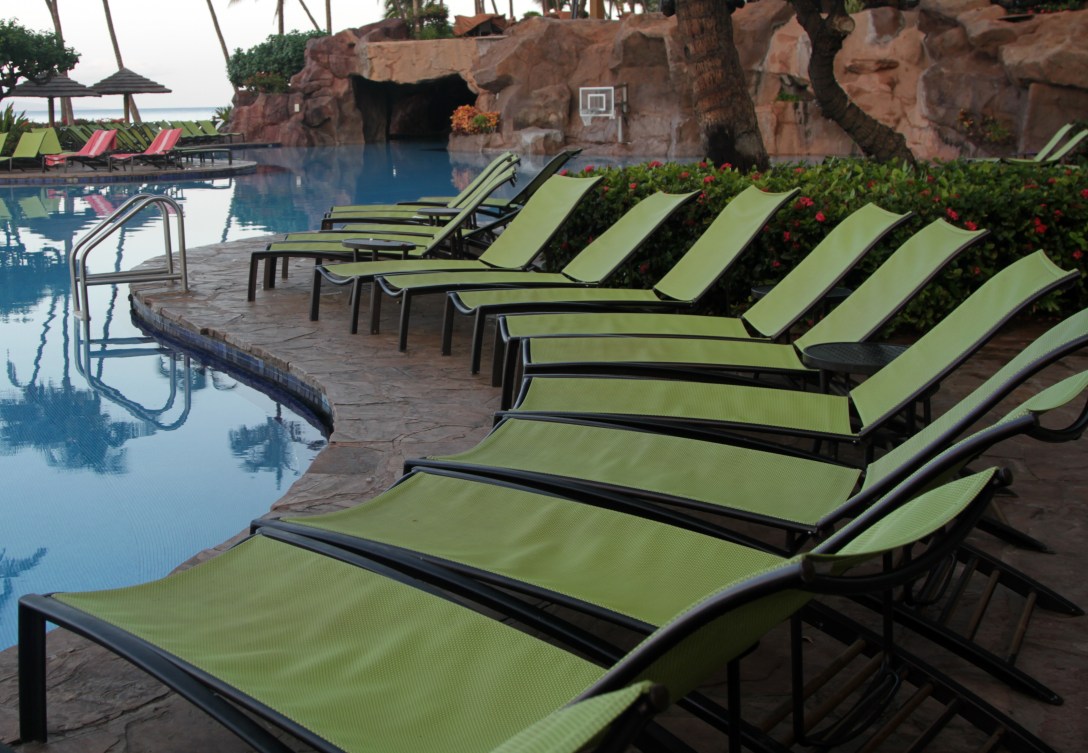
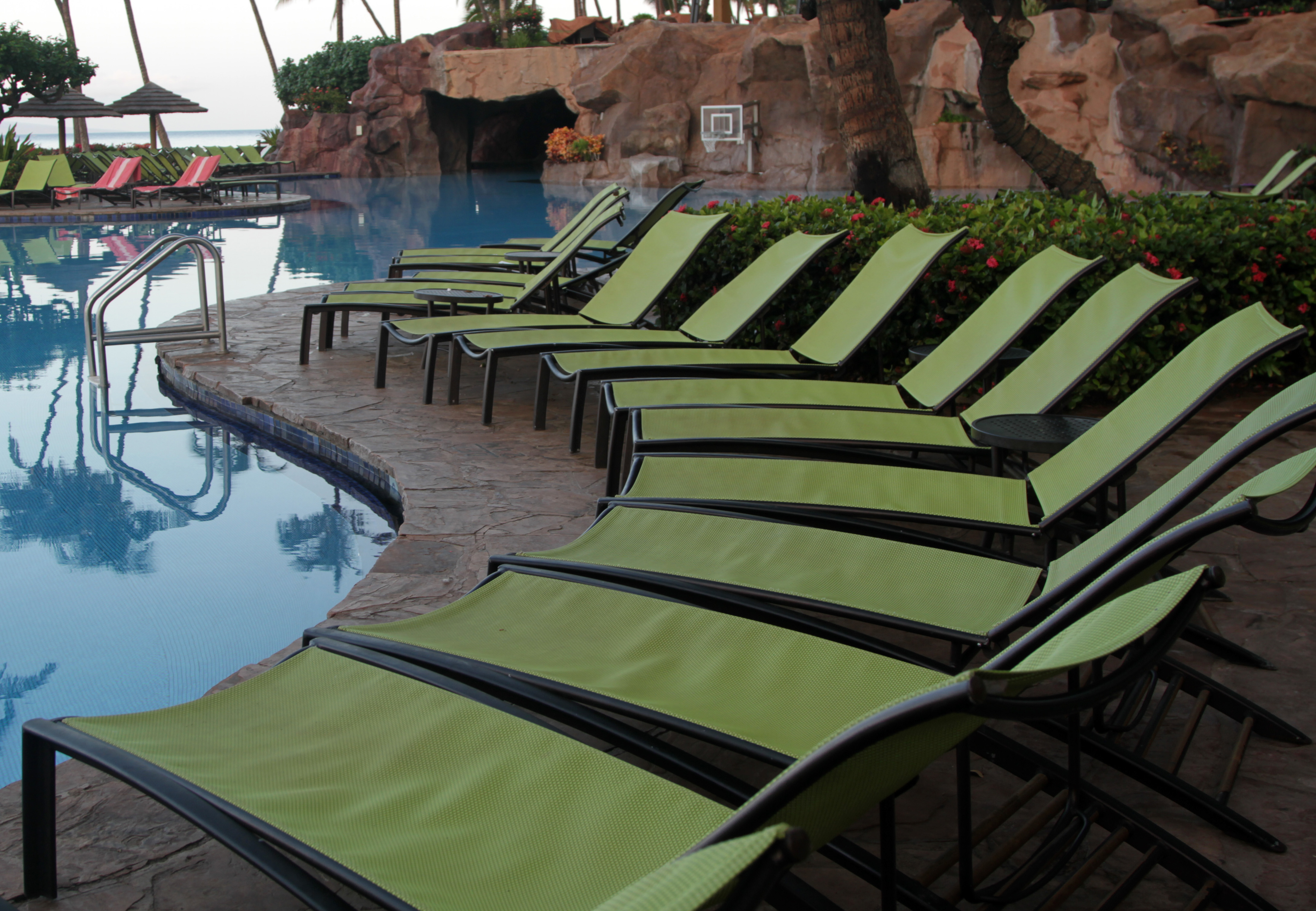
Waikiki Workation WeekEvery holiday season sees a population surge at popular beach resorts. In the past this meant throwing out a towel early to get a pool chair, bringing a good book to relax with, and filling in the out-of-office message before leaving work. But hotels are starting to see very different needs emerging around their pools.

Your family might be the kind where all the members go on vacation and enjoy the full benefits of it. Or you might be the kind of family where one of you had to go on a “workation” to be able to get away. Or you might be a single traveler in either category. What you all have in common is that you now put your devices in your pool bag together with your sunscreen and glasses.

E-readers are challenging the pocket paperback as the way to relax with a book. Smartphones with their social media applications are as common as pool towels. Magazines are hanging in there, but are being challenged by tablets and e-readers. Kids play games on tablets. A few workaholics bring their laptops. We used to stay by the pool until we had to eat. Now we stay there until we are out of device juice and have to go and recharge our batteries.

Last year, MIT demonstrated a solar-powered lounge chair that offers a bit of shade and an integrated USB charger, with solar panels on top connected to power outlets in the chair. So which hotel will be first to deploy these or classic pool chairs with USB outlets to offer power by the pool? A drink might not be the only juice we will demand in the future.

My predictions for the future are:

• Devices by the pool are here to stay

• Pool chairs with power outlets will be here within the next two years

• “Workation” might sound awkward, but is a growing user need for hotels to support

• Mobile coverage by the pool and in the room is an important deployment scenario for heterogeneous networks

Coverage & Capacity Choice

33. Coverage and capacity crossroads

Operators that are preparing for small-cell deployments face a strategic choice between revenue growth and cost-reduction strategies. ‘Growing Green’ is a proactive strategy for growing mobile-data revenues through superior networks at business premises. ‘Reducing Red’ is about capturing low-value data traffic at a low cost in areas that have mobile coverage and capacity limitations.

Revenue growth strategies for small cells can be characterized in a number of different ways. First, they focus on business locations where the employer’s business, rather than their employees, is transforming to leverage the potential that ’smart’ and ‘mobile’ solutions can deliver. Second, the commonly used devices (including smartphones and tablets) are the same that we use privately but have unique application and network requirements beyond what classic best-effort data-services deliver. The third characterization has a clear potential to deliver incremental revenues in exchange for superior network services. Fourthly, this strategy addresses both the mobile voice and data needs that are realized through networks incorporating a mix of 3G, 4G and Wi-Fi.

A vital insight is that smart industries rarely fall in love with dumb networks even though they date and romance a bit in the beginning. ‘Growing Green’ includes a broad variety of scenarios, including networked offices, networked retail, networked manufacturing, networked warehouses, networked hotels, networked arenas etc.

The cost-reduction strategies look similar at a first glance but have different goals. First, their main objective is to increase coverage and/or capacity at the lowest possible cost. Second, control over Quality of Experience (QoE) is not critical and can be relaxed from mobile network quality standards. Third, the business model is built around no or low incremental-revenue potential but with a strong churn-avoidance profile. Fourth, this strategy is data-centric and is often realized with single radio technology, such as Wi-Fi, or through multiple-radios decoupled from the macro network. ‘Reducing Red’ scenarios address the same issues as above.

‘Growing Green’ and ‘Reducing Red’ are viable and likely deployment strategies. Operators are likely to mix both. The primary difference is in the network-build approach. ‘Growing Green’ involves a higher level of ambition upfront for network design, types of equipment used and installation models that are optimized for minimized operational cost and for high network availability and control. ‘Reducing Red’ minimizes network design, allows for equipment with reduced service-delivery requirements and is optimized for zero-touch installation. This minimizes initial capex but adds cost in the areas of support and life-cycle management.

My predictions for the future are:
• Both ‘Growing Green’ and ‘Reducing Red’ will be considered for pure Wi-Fi as well as 3G/4G/Wi-Fi small-cell deployments.
• ‘Growing Green’ strategies will gain traction where the network is serving businesses in transition towards a smart business.
• ‘Growing Green’ strategies are built on the foundation that mobile is or will soon be the primary connectivity for premises with a reduced role for the fixed LAN.

When Will Wireless WOW! Worlds’ Workers

Outrageous offices

In business environments, the initial wave of WiFi deployments has been a complement to a fixed LAN. Enterprise WiFi used to be associated with extensive network planning and advanced services, but has gradually transitioned into a best-effort game where capacity is increased by adding new nodes rather than by network design and optimization. These principles have also been applied for the first wave of Femto cells as a fixed line extension.

As employees become increasingly mobile, the question has arisen how long the Fixed LAN will remain the primary infrastructure? The cost of technology is decreasing, and feeding 100 small cells with 3G/4G/WiFi, floor space of equipment rooms can be reduced just as power, cooling, and wiring, compared to an Ethernet port at every desk plus WiFi. We are getting closer to the point where the mobile/wireless network can become the primary business-premises network.

A WiFi or small-cell network intended to be the primary infrastructure will need to fulfill tougher performance requirements. These requirements are above what made WiFi access points and Femto cells popular as a secondary access technology, and they will determine whether businesses will prefer to deploy mobile/wireless as the primary or secondary infrastructure. Hence, they will determine businesses’ future demands on their IT and network partners.

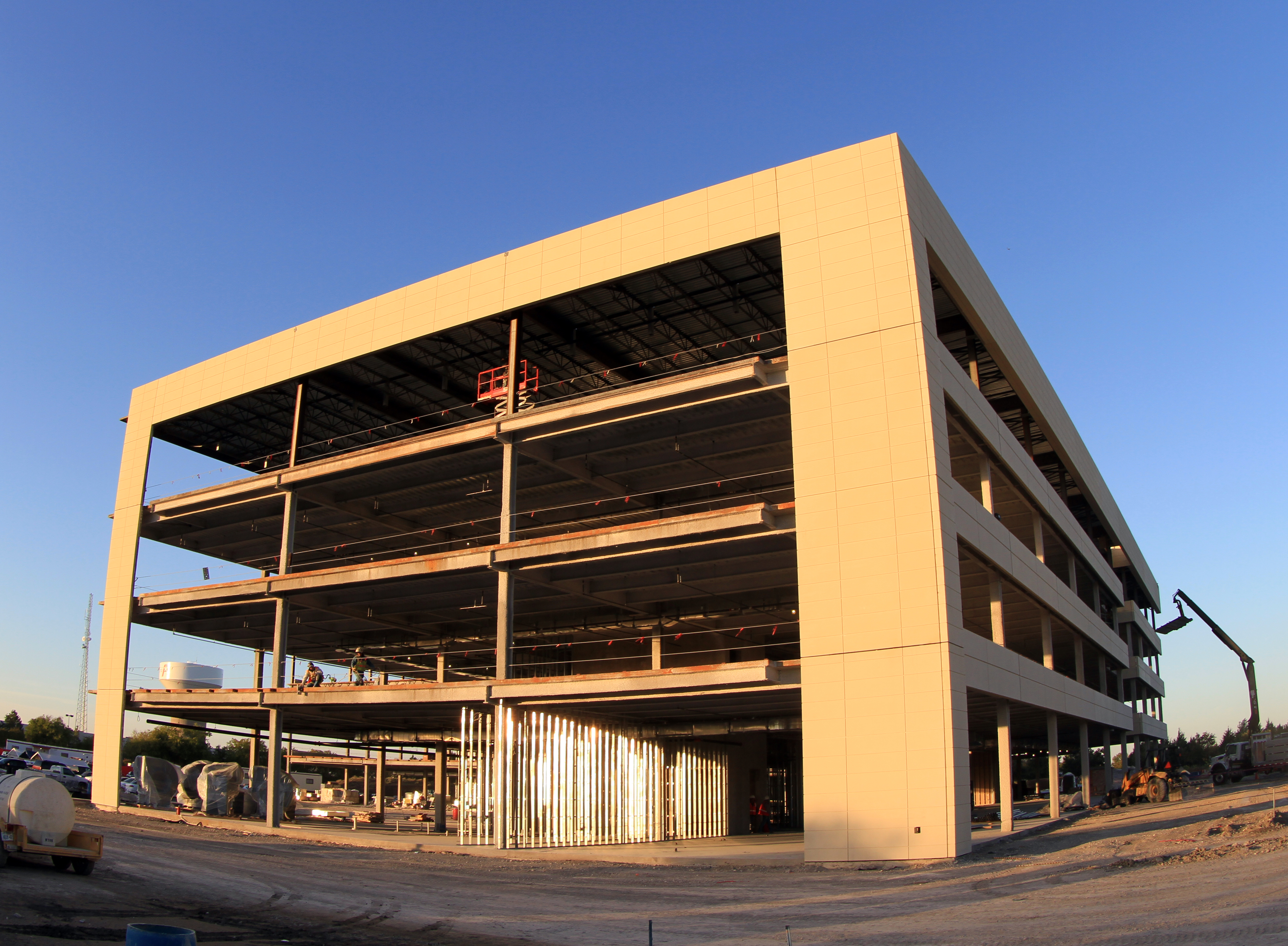
For new business premises it seems obvious to build for small cells from day one. This includes designing premises’ networks for fiber, and for power to be terminated at the optimal small-cell location. These locations should be close to the ceiling rather than the floor to ensure effective wireless coverage, which actually is contradictory to the current norm for power, phone and Ethernet outlets. LAN closets might be kept for an interim period of time, but they should be designed to enable easy conversion of the floor space into working floor space. And finally, if leasing power and cooling solutions the constructor had better secure a short-term leasing contract.

My predictions for the future of mobile/wireless networks for professional use are: * The rapid adoption of mobile devices and even more mobile ways of working are driving the need for mobile/wireless to become the primary access method. * Fiber distribution within a building to small cells supporting WiFi/3G/4G becomes the norm for network infrastructure across all knowledge worker segments. * The extensive availability of legacy CAT3 (phone) and CAT5 (Ethernet wires) can be used as stop-gap solutions, provided termination points are located to minimize need for new/extra wiring


Data Define Daytona Drivers Destiny

daytona

Modern Race Cars performance is increasingly dependent on the continuous and rapid collection, interpretation and analysis of very large amounts of data.

A few weeks ago NASCAR teams held their Daytona pre-season thunder to fine tune their new cars. But what does NASCAR evaluate and how do the race car teams get the race car performance data to and from the track to their headquarters?

Car racing today is about outperforming your competitors on very small details. Chassis and engines are similar and 1/100 and 1/1000 of seconds are chased in the detailed tuning of tire pressures, angles, suspension and aerodynamic details. This year, NASCAR is introducing a completely new generation of a car. Understanding how the new car will behave on the track will be critical for success.

As a complement to regular measurements, teams this time used action cameras placed in strategic locations on the cars for filming during testing. Cameras were placed by the side pods, close to the ground, under the floor to capture the rear suspensions, and in the wheel houses to watch tires in action. The films provide high resolution views and details on how the car performs. (Filming is only allowed during testing. During practices and the real race, data is collected from various sensors.)

All data generated from the filming is analyzed after each session. Some data can be analyzed at the track, some needs to be sent to team headquarters for analysis. Most teams use laptops with wireless data cards and rely on the mobile network for transmitting the data. Ericsson sees large spikes in upstream data traffic from the teams immediately after a filming session has been completed. This raises the bar on network performance, its reliability and throughput, so no time is wasted in order for the teams to get their data analyzed.

My predictions for the future: * Telemetry data from race cars will continue to grow quickly and is a good example of how the Big Data movement is affecting racing.

* High Capacity Network access at race tracks will grow in importance, the faster the results can be delivered from the track, the better the teams can prepare their cars.

* With more and more applications moving from PCs into the Cloud the Network becomes ever so critical.

…and just because I like it, here’s the film again!