Digital Device Dependency Drive Digital Detox Demand

digital-detox-img_4948

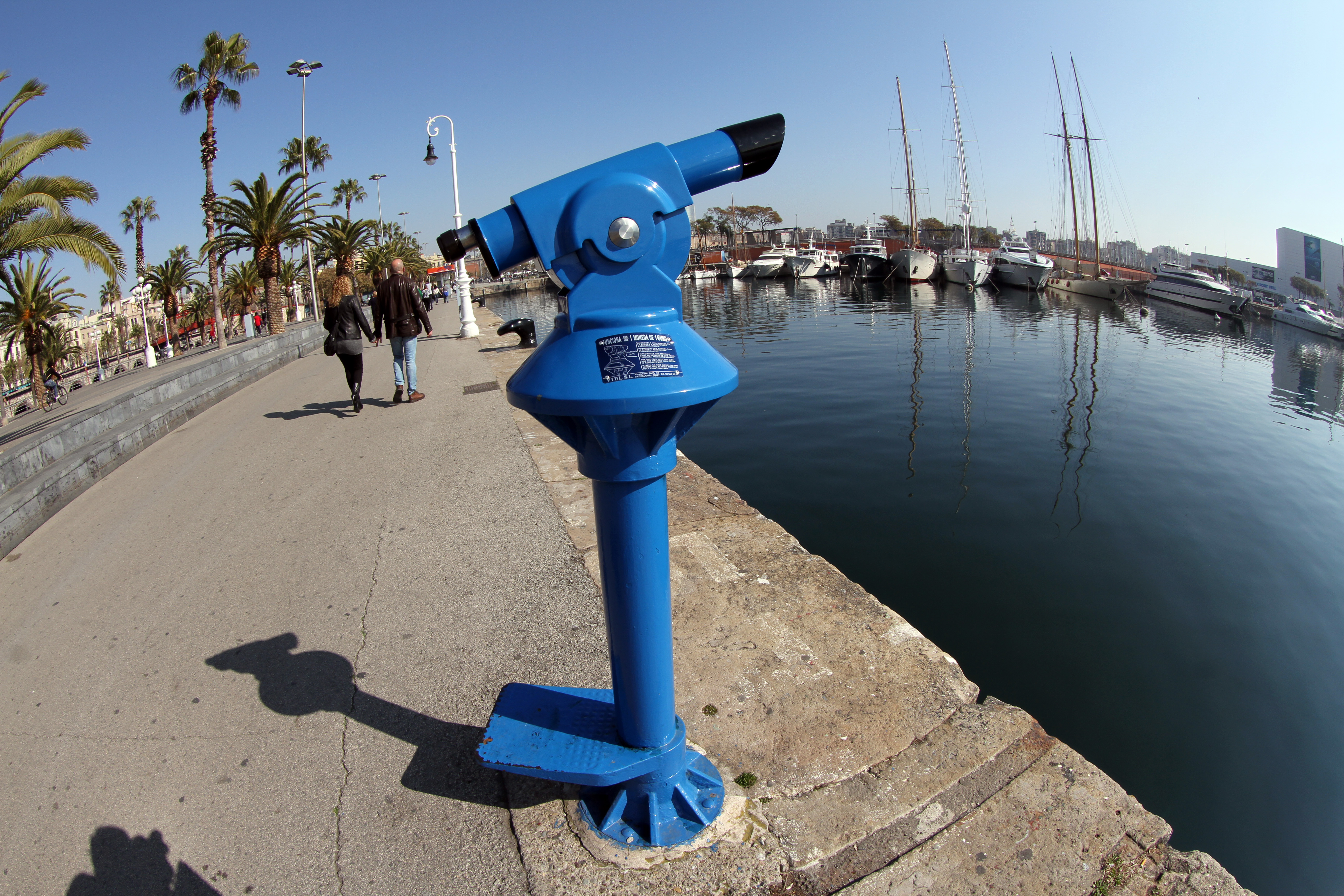
Are you among the users dependent on four or five networked devices on a daily basis? These devices provide endless opportunities and can also create addictive behaviors. Nevertheless, some of us might benefit from a bit of “digital detox” during our vacation as we recharge for the fall.

A survival question for application developers is to offer their applications on a variety of platforms, such as smartphones, tablets, laptops, PCs and TVs. It is also about the seamless transition between them and to allow for dual-screen use cases. This creates an application availability opportunity for users to take advantage of or to use excessively.

Many users have adopted a multiscreen and multi-social media lifestyle without putting boundaries for when their URL life should stand back for their IRL life experiences. Both business communications and excessive social media use could become a stress factor to wind down from during the vacation.

The digital detox industry is growing quickly and offers everything from initial seminars to advanced programs. All with the purpose of finding your own wellbeing during a period without or with reduced device access. It is not about dropping the devices but finding the right balance between your networked and your physical/mental life. Both are an essential part of life in the Networked Society in the same way as a great meal requires both food and drinks in order to be well-balanced.

My suggestions for vacations this summer:

* Reflect on your personal usage patterns and decide which screen and app combination makes you relax and enjoy life, without causing stress.

* If you are a heavy user of both business communication and social media, consider dropping one of them during your vacation this year.

* Elaborate with shifting content consumption patterns to a new media/device combination allowing you to free up time. For example, stop reading full books and shift to audio summaries of the same book.

* Determine which stimuli reactions, for example, responding, pinning, liking, re-tweeting you see as adding value to your important life accomplishments.

STEM Students Soon Society Scarcity

STEM students Soon Society Shortage

In a world where all business sectors will migrate into the Networked Society, certain competencies will become a precious resource. Science, Technology, Engineering and Mathematics (STEM) talent will be the crude oil on which the future Networked Society will run. Demand will surpass supply for the foreseeable future, and the STEM shortage will not only be an issue for the tech sector.

As business migrates into the Networked Society, it becomes increasingly dependent on technology. Is a connected watch a clock with a tech addition, or is it a piece of technology that is also capable of showing the time? Is a connected car a car with a tech add-on or a computing platform mounted on a rolling chassi? Is a connected camera a phone with integrated camera or a camera with integrated connectivity? The thing that all sectors will have in common is their connection to, and dependency on mobile technology. And this aspect is rapidly growing, reaching the point where mobile networking is becoming an integral part of the development of most businesses.

STEM talent is already in short supply globally, and shortage is not going away anytime soon as demand rise across multiple industry sectors. Computer science and mobile networking skills are perhaps the safest bet today for a future career in the Networked Society. The biggest difference from the past is that future skills will be more application-centric, and will work across technologies.

Just adding STEM talent will not be enough. The surge in demand will drive new forms of cross-company collaboration. STEM talent has historically been an in-house resource for tech companies. Many Networked Society companies will rely on external STEM resources for certain parts of their business processes. A related challenge involves what to define as your differentiation in the market.

Some predictions of the future are:
* The transition to a Networked Society will drive technology deeper into most business sectors that we today consider as non-tech.
* STEM talent will face high demand and short supply for the foreseeable future.
* The transition to a Networked Society will create new interfaces between companies, often with critical tech skills residing outside the company.

Sport Stadium Smartphones Soon Surpass Super Screens

Stadium Spots

For decades, the construction of a new sports stadium has been associated with significant investments in a Jumbotron, an enormous video screen. At the recent D11: All Things Digital conference, the San Francisco 49ers American football team and Sony outlined an alternative approach where users bring their own screens to the game, and where 4K video and arena-specific video feeds transform the user experience.

With a fan base upgrading their phone and tablet devices every 18-24 months, sports franchises have new and very capable screens to target. You can even ask if it is right to invest in a Jumbotron with a lifetime of 10-20 years when fans spend the same amount of money every second year on upgrading their devices. With bring-your-own-device (BYOD) widely established in the workplace environment, it is about to make an entrance into major sports arenas as an integrated part of the live experience.

The San Francisco 49ers aim to create a “software-enabled stadium” as they finalize the construction of the Levi’s Stadium. Without the restrictions of the one-screen Jumbotron concept, it is possible to distribute multiple video feeds in the arena. They can combine the use of standard TV feeds with special camera feeds for arena users only. A bigger share of the experience can be delivered to user devices through apps and media sent to their personal screens. In essence the software-enabled stadium is about delivering a personal experience to 68,500 fans in the same location.

The software-enabled stadium will have very different network needs than a classic Jumbotron-based venue. The stadium networks need to be designed to support media streams to users’ own devices, and to do it in very large volumes during events. These new networks can be funded with a reallocation of Jumbotron funds to smartphone/tablet feeder networks.

My predictions of the future of stadium networking are:
* The biggest sports Jumbotrons have already been built, and the new game in town is to focus on the 7-10-inch mobile devices
* Sports venues will ensure that very capable networks are built to support the influx of screen-equipped fans, way beyond current capabilities.
* Innovation around local media feeds and associated advertising models is a vital part of the development of the personal sports screen
* The phone/tablet screen will be as important as the TV in connecting with the fan base of the future. New fans did not grow up with tube TV as the norm

Little Ladies Love Laptops & LTE

38. Little ladies love laptops and LTE

This is the first generation of children who are growing up with tablets. Some young children have used these devices and the apps on them for close to three years, but up until now most of that use has been restricted to broadband in Wi-Fi enabled homes. So what will Generation Z and the Pluralist generation dream of for the future?

Last year, an 8 year old sent a wish-list sent to Santa Claus that consisted of just 6 letters: ‘Laptop’. After a deeper investigation it became clear this 8-year old considered tablets to be for kids who did not know the alphabet yet nor difference between left and right mouse clicks. But for someone like this 8-year old, who had both these skills, the obvious choice was to trade-up and become a laptop-enabled citizen.

Just upping the game on the device itself may not be enough. Most kids have figured out by now that the tablet is broken in many ways. It doesn’t work outside their home, not in the car, nor on planes. They see their parents being on the phone everywhere and they wonder why the bigger tablet don’t work in the same locations. Integrated 3G and 4G connectivity is demanded first, in some cases, by the youngest members of the family.

These trends tie into young children’s transition from pure content consumers, in the form of apps and games, to content creators. As they start the journey of creating content on their own, they will experience the same connectivity limitations with tablets that adults experience. And since they have grown up with tablets they might instead skip laptops altogether and go straight to an ultra-book as long as they can get the mouse and keyboard they are looking for.

My predictions of the future for the youngest Networked Society members are:

• Tablets will remain their first computer with a starting age of around year 2 or 3.
• Their demand for an environment enabling content creation will arise when they learn how to read and write.
• Handwriting skills will be impacted, as children adopt laptops and ultra-books very early on in their lives.
• Full-fledged connectivity is relevant to very young people who don’t have preconceived notions about how to connect to the network. They prefer to stay connected all the time.

Frequencies Fuel Fantastic Future

36 Frequencies Fuel Fantastic Future

How can ecosystems respond to soaring mobile data traffic and the risk of exhausting network capacity? Making new spectrum available is an obvious response, but two other elements are rapidly gaining in importance. Frequencies are the fuel for a fantastic mobile future, but it is vital to ensure the spectrum plans and combinations can be realized in large volumes on both the network and the device side to bring the full value to society.

The ecosystem used to be simple, with mobile 2G/3G in well-defined licensed bands and Wi-Fi in an unlicensed 2.4GHz band. With the introduction of 4G, refarming of existing 2G/3G bands and the introduction of Wi-Fi in the 5GHz band, the landscape is changing quickly. The two spectrum types also used different business models and were delivered by different networks.

Devices need to support a growing number of frequencies in order to address the whole global market. Device providers are faced with the task of restricting use to Wi-Fi and nomadic use or to provide integrated Wi-Fi/3G/4G connectivity for full mobility. The 3G and 4G choice involves an HSPA vs CDMA selection for 3G and suitable bands for LTE. The most common bands are 700, 850, 900, 1800, 2100, 1700/2100 and 2600Mhz. Users buying a new tablet or phablet are likely to face a mobile choice that is more complex than they expected.

Networks have adopted advanced multi-standard radio solutions combining 2G/3G/4G for the larger macro sites. These sites have now been modified to support the new target technologies in their new frequency bands. On top of that, the introduction of small cells with Wi-Fi/3G/4G moves the multi-frequency need to the more price-sensitive small cells. The symbiosis of devices and small cells will be extra interesting to track as a vital enabler for the mobile enterprise.

The mobile ecosystem is dependent on the three mobile “natural resources” – spectrum, devices and networks evolving together and supporting a growing number of frequency bands.

Here are my predictions for the future:

  • Advanced multi-radio technology solutions will be the norm in devices designed for daily use
  • New family plans have significantly reduced the barrier of entry for powerful Wi-Fi/3G/4G devices to the point where Wi-Fi-only devices are starting to become limited in their use
  • The addition of new frequency bands and refarming of existing ones requires technology flexibility on both the device and network side
  • Not all frequency bands made available on a global basis will be able to generate market momentum for a full-fledged device and network ecosystem.

Be Bullish! Broadcast Build Ballgame Buzz


© Peter Linder 2013 – All rights reserved

A short while ago we outlined how NASCAR provides fans with an integrated live and multimedia experience. The next big thing is to bring fans of ball sports into a new key event experience environment, where live and multimedia is integrated. The first step is to upgrade venue coverage and capacity and then begin broadcasting video at arenas and venues to new “fansy-phones” – .e.g. phones specifically designed with great sports-viewing capabilities.

Verizon has announced that American football fans will get access to mobile-broadcast services at the SuperBowl in 2014. Baseball fans of the future will demand new “bold parks” allowing them to zoom in on the MLB action from a specific camera during the game. Basketball replays to your palm will fill the commercial breaks with continuous NBA coverage at the arena. Golf fans could follow their favorite PGA players at courses that are by nature very spread out. The live experience for tennis fans too can be taken to all corners of the world as the technology is adopted at ATP events. Last but not least, premium football/soccer experiences will be transformed over the next five years. When you can follow your player on the small screen and the overall action live on the big screen, it is like being your own producer, since you are the one who gets to pick which camera angle to see.

The reality today at most venues is that data capacity is restricted often to SMS/TXT services and Twitter updates. Right now advanced DAS, Wi-Fi and small cell solutions are being introduced to upgrade data capacity. Next, the network demand from video-rich services will call for new Enhanced Multimedia Broadcast Multicast Services (eMBMS) solutions such as the new 4G enabler to complete the experience.

But what’s new here? Ericsson outlined Mobile Broadcast solutions in 2004. Mobile TV was THE topic at Mobile World Congress 2008. Multiple broadcast technologies (e.g. DVB-H, BCMCS MBMS and iMB) have been launched, with limited success.

Two things have changed. Connecting to fans through social media and enhanced live experiences has become a necessity for any major sport with the ambition to attract younger fans in the networked sports society. Next generation “fansy-phones” sporting a screen where you can actually see the ball, can be designed already today. These are two very strong drivers for an integrated live and multimedia experience.

My predictions for the future are:

• Efforts to enhance the user experience at key events will propagate quickly through various sport and arena categories.

• Between 2013 and 2015, Enhanced Multimedia Broadcast Multicast services will enter the market at premium sport venues, starting in North America.

• The introduction of “fansy-Phones” with eMBMS capabilities will target sports fans as the primary user group.

• Sports applications will be the catalyst of the initial network build-outs driving “fansy-phones” on to the market.

• Broadcast innovations beyond sports at venues are interesting add-on applications as the sport market matures, e.g. personal production @ event.