Interactive Ideas inspire Innovations

©Peter Linder 2013 – All rights reserved

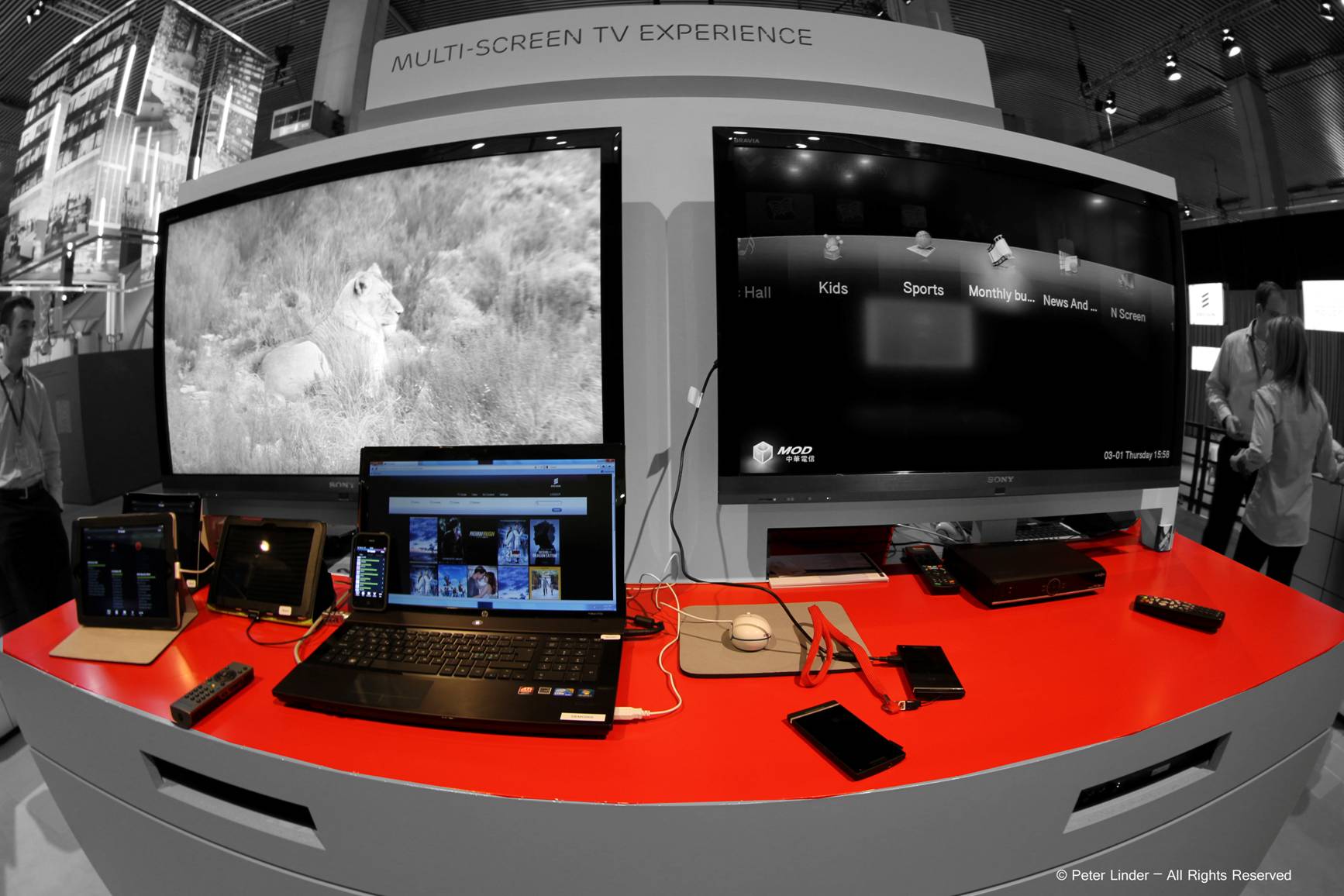
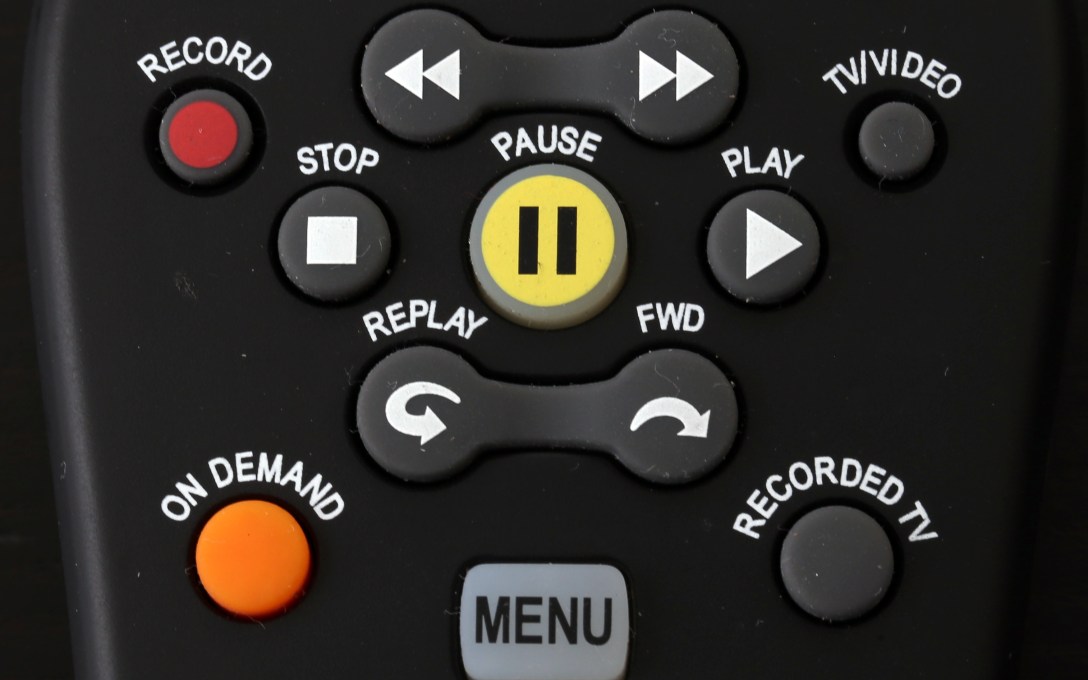
It is 20 years since the birth of video on demand (VoD). Time Warner was pushing the envelope in Orlando, US, over cable networks. BT in the UK made Colchester the VoD capital of Europe. All this was driven by the vision that interactivity would change our approach to video/TV consumption. Ericsson’s first major broadband push was around Residential Interactive Broadband Services. What can we learn from the first 20 years of interactive/on-demand video, and why will the next five years in the Networked Society be very different?

In the initial VoD era, later labeled iTV, it was all about turning the video rental market into a networked revenue stream. Before it even started in volumes, internet access became the market maker for DSL and cable. Switched Video Broadcast was introduced as an innovation for delivery of broadcast services across copper-based networks. Finally, VoD and broadcast TV became part of a triple play bundle before the market took off.

Access to attractive content offerings has always been a key issue for on-demand video, to a point where the original services’ VoD offerings could be referred to as “very-old demand.” The worlds of the operators, content owners and consumer electronics manufacturers collided at the triple-play intersection, and a dual vision emerged for managed IPTV services in coexistence with over-the-top video. This pioneering work has resulted in the big boom for the sales of smart TVs or internet TVs during the last three years.

The missing links in the large-scale adoption of interactive/on-demand video are now clearly visible. Interactivity/on-demand and personalization goes hand in hand. Interactivity is not a family experience. Interactivity is not only about video consumption. It is about taking national advertising through local to personal ads as an instrumental part of the business model transformation. Users have historically considered the internet and voice as commodities and paid a premium for mobile and video. The center of gravity for interactivity will be where mobile and video meets. The big question is how quickly will we move toward such a “video-all-demand” world?

Here are my predictions for the future of interactive video:

* Any video offered on-demand has a higher value than linear video. This applies to users as well as advertisers. With live sports being the big exception.
* Personalization of video is here to stay. We have quickly moved from one TV per family toward two to three screens per individual.
* The interactivity has become multifaceted and involves complex relations between multiple screens across ecosystem borders.
* With powerful networks and high-resolution screens in a variety of sizes, two of the main innovation risks are eliminated. Now we can focus on the on multiscreen interactivity and the business model transformation for user fees and advertising revenues.
* The initial vision will be realized. It just took us 25 years to get there, with the next 5 years being the most interesting part of the journey.

Daily Device Dependency Drive Digital Detox Demand

©Peter Linder 2013 – All rights reserved
© Peter Linder 2013 – All rights reserved

Are you among the users dependent on four or five networked devices on a daily basis? These devices provide endless opportunities and can also create addictive behaviors. Nevertheless, some of us might benefit from a bit of “digital detox” during our vacation as we recharge for the fall.

A survival question for application developers is to offer their applications on a variety of platforms, such as smartphones, tablets, laptops, PCs and TVs. It is also about the seamless transition between them and to allow for dual-screen use cases. This creates an application availability opportunity for users to take advantage of or to use excessively.

Many users have adopted a multiscreen and multi-social media lifestyle without putting boundaries for when their URL life should stand back for their IRL experiences. Both business communications and excessive social media use could become a stress factor to wind down from during the vacation.

The digital detox industry is growing quickly and offers everything from initial seminars to advanced programs. All with the purpose of finding your own well-being during a period without or with reduced device access. It is not about dropping the devices but finding the right balance between your networked and your physical/mental life. Both are an essential part of life in the Networked Society in the same way as a great meal requires both food and drinks in order to be well-balanced.

My suggestions for vacations this summer:

– Reflect on your personal usage patterns and decide which screen and app combination makes you relax and enjoy life, without causing stress.
– If you are a heavy user of both business communication and social media, consider dropping one of them during your vacation this year.
– Elaborate with shifting content consumption patterns to a new media/device combination allowing you to free up time. For example, stop reading full books and shift to audio summaries of the same book.
– Determine which stimuli reactions, for example, responding, pinning, liking, re-tweeting you see as adding value to your important life accomplishments.

Be Bullish! Broadcast Build Ballgame Buzz


© Peter Linder 2013 – All rights reserved

A short while ago we outlined how NASCAR provides fans with an integrated live and multimedia experience. The next big thing is to bring fans of ball sports into a new key event experience environment, where live and multimedia is integrated. The first step is to upgrade venue coverage and capacity and then begin broadcasting video at arenas and venues to new “fansy-phones” – .e.g. phones specifically designed with great sports-viewing capabilities.

Verizon has announced that American football fans will get access to mobile-broadcast services at the SuperBowl in 2014. Baseball fans of the future will demand new “bold parks” allowing them to zoom in on the MLB action from a specific camera during the game. Basketball replays to your palm will fill the commercial breaks with continuous NBA coverage at the arena. Golf fans could follow their favorite PGA players at courses that are by nature very spread out. The live experience for tennis fans too can be taken to all corners of the world as the technology is adopted at ATP events. Last but not least, premium football/soccer experiences will be transformed over the next five years. When you can follow your player on the small screen and the overall action live on the big screen, it is like being your own producer, since you are the one who gets to pick which camera angle to see.

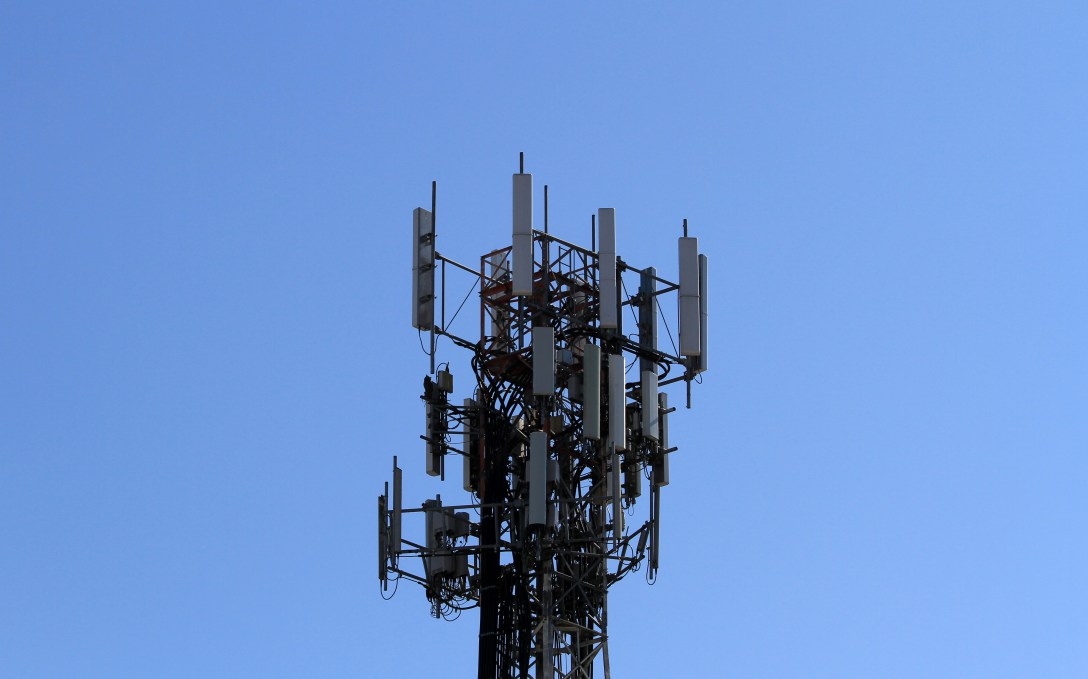
The reality today at most venues is that data capacity is restricted often to SMS/TXT services and Twitter updates. Right now advanced DAS, Wi-Fi and small cell solutions are being introduced to upgrade data capacity. Next, the network demand from video-rich services will call for new Enhanced Multimedia Broadcast Multicast Services (eMBMS) solutions such as the new 4G enabler to complete the experience.

But what’s new here? Ericsson outlined Mobile Broadcast solutions in 2004. Mobile TV was THE topic at Mobile World Congress 2008. Multiple broadcast technologies (e.g. DVB-H, BCMCS MBMS and iMB) have been launched, with limited success.

Two things have changed. Connecting to fans through social media and enhanced live experiences has become a necessity for any major sport with the ambition to attract younger fans in the networked sports society. Next generation “fansy-phones” sporting a screen where you can actually see the ball, can be designed already today. These are two very strong drivers for an integrated live and multimedia experience.

My predictions for the future are:

• Efforts to enhance the user experience at key events will propagate quickly through various sport and arena categories.

• Between 2013 and 2015, Enhanced Multimedia Broadcast Multicast services will enter the market at premium sport venues, starting in North America.

• The introduction of “fansy-Phones” with eMBMS capabilities will target sports fans as the primary user group.

• Sports applications will be the catalyst of the initial network build-outs driving “fansy-phones” on to the market.

• Broadcast innovations beyond sports at venues are interesting add-on applications as the sport market matures, e.g. personal production @ event.

Mchn-Maaaaaaschiiiiiine-Mchn – Middle Man Matters

© Peter Linder – All Rights Reserved

Why most people miss the role of the world’s largest machine when predicting the future.


When Ericsson sold its 50 percent stake in Sony Ericsson to Sony, a common question to Ericsson employees was: “What do you do now that Sony has bought your company?”


Not all people I meet understand my explanation about what a mobile network is and does. I believe the term “network” is too abstract a concept for most people, even if we keep it simple and say it’s the internet’s backbone and mobile-access network.


In addition, the communications industry sometimes talks about the future in terms of machine-to-machine (M2M) communication and industry verticals. The seven letters that make up machine are used to outline the future of servers and applications at one end, and the future of devices at the other. The magic “2″ refers to the largest machine of them all – the network.

Most people get the idea that there is a machine somewhere working away so that 5 billion people can talk, SMS/TXT and send data to one another. They do not reflect on how this machine is changing so it can transform all the industries around us into smart industries. So how do we get traction with such ideas if the majority of society believes mobile phones communicate with each other like walkie-talkies; in other words with just air between them and no network?


The following examples highlight the role of the network in all society stakeholder groups:


* When breaking mobile-broadband networks into two main parts – the internet backbone and the mobile-access network – most people follow the discussion on what a network is all about a lot better.


* Machine-MACHINE-Machine is a better expression regarding the evolution of the communications industry. This makes it clear to all society stakeholders that there are three fundamental machine developments in play.


* The network plays a vital part in making vertical industries “smart”, and smart industries require smart networks.


* Significant network investments are required to support 50 billion devices across new industries, way beyond the requirements that brought voice and data services to 6 billion mobile phones.


I think the following vital questions need to be asked when discussing the networks in the Networked Society:


* How do we secure the investments in network capacity and coverage to keep up with the demand from the Networked Society?


* How do we create new business model innovations across industry borders so all key stakeholder groups benefit?


* How do we secure regulatory frameworks that promote rather than prevent network innovations?


All of the above are complex issues. The resolution requires a broader understanding in all society groups about what the role of the network is, as it will remain THE enabler for the Networked Society.


Flatscreens find fantastic furniture fit

Buying a TV was easy when it was all in one piece– when all you had to worry about was whether you should put it on a TV stand or hang it on the wall. But now innovation is being taken to the next level as key TV and audio technologies are being integrated with furniture, resulting in some interesting hybrid solutions.

As we move towards the Networked Society, technology-savvy products are being combined with products from other industries to form cross-industry solutions to everyday problems. This has been demonstrated with IKEA’snewUppleva (“experience”) solution, recently launched in Europe and scheduled for a US launch next year. With Uppleva, multimedia technology and furniture are combined in a way that ensures the product looks good both when it’s on and when it’s off . Cross-industry collaborations like this one are becoming increasingly important.

Today, creating a multimedia experience in your own home is often quite complex. Basically, you either need to be a genius or you have to get support from one to put it all together, even if you’ve bought all the components from the same store. The installation and service activation is the easiest part, the lifecycle management of the solution the more cumbersome part.. After a long day at work, who wants to take on this 24/7 role to keep their family connected? Pre-integrated solutions based on well-conceived platforms can simplify our lives a lot.

You can no longer wow your neighbor simply by buying an HD-quality flat TV. We now take it for granted that TVs come in almost any size we want, and at an affordable price. BluRay players and 7+1and 5+1 audio systems are amplifying the experience of today’s TV viewers. So are wireless access to subwoofers and loudspeakers, and today’s advanced storage and streaming solutions– not to mention the growing number of HD-capable recording devices. All of these additions serve the individual in the Networked Society as we become both producers and consumers of a new kind of home entertainment.

In the future, I expect to see the following trends:

  • Cross-industry innovation across historical industry borderlines will be the norm in the Networked Society
  • Large digital screens will continue to play a key role in delivering our multimedia experience, although we have reached the point where simply expanding the size of the TV is no longer enough
  • Manufacturers of full custom solutions and best-of-brand approaches are encountering competition from the makers of flexible holistic-solution offerings, in which the technology features are complemented with design, ease of use and life cycle management as key buying criteria. criteria

Powerful Personal Pitching & Putting Production

© Peter Linder 2012 – All Rights Reserved

It is rare that a Masters Golf Tournament features so many Swedes in contention for the final round. And this year there were four: Peter Hanson, Henrik Stenson, Fredrik Jacobson and Bubba Watson. But is this what I enjoyed most about watching this year’s Masters – or was it that I was able to create a truly unique, personalized viewer experience for myself?

This year, for the first time, I was able to view four different channels at once: two featured player groups and two featured parts of the course. I could then choose which screen I wanted to follow, or watch all four screens simultaneously.

Being able to get specific statistics from the dedicated Masters app made the experience complete. Not only did I get access to information about the primary leaderboard, I was also able to receive updates on the progress of the other players I chose to follow. And to me that was really important.

To improve my viewing experience even further, next year I would like to watch the tournament with a more extensive offering of camera angles. This should be possible, given that consumers continue to embrace the shift toward multi-screen and multi-network TV services.

For more than 30 years, innovation has been a part of the production of sports TV. Most significantly, we’ve seen the overlaying of graphics on a live TV signal and the transition to HDTV cameras. And with more and more advanced TVs, tablets and phones, producers will continue to find new ways to hold viewers’ attention – 3DTV, five-channel audio and a range of camera-angle selections are just a few examples.

The multi-platform, multi-screen future is changing the way we interact with our content. Here are some of my predictions about the future of viewing live sports TV:

  1. Users will be given a choice between the main production and the editor’s choice version, while following the game through multiple cameras
  2. Viewers will be able to access additional statistics about the game through a companion screen rather than the main screen
  3. Users will control what appears on the main screen through a tablet that acts as a remote control
  4. The viewing experience will be a blend of the broadcast on the main screen and interactive features on a companion screen
  5. In a few years’ time, golf players will be allowed to have their phones on during tournaments to interact with fans through social media
  6. New business models and advertising options will evolve for the TV experience that we produce ourselves.