Cloud Collaboration Create Cities’ Competitive Companies

55. Cloud Collaboration Creates Cities Competitive Companies - Edited 1610

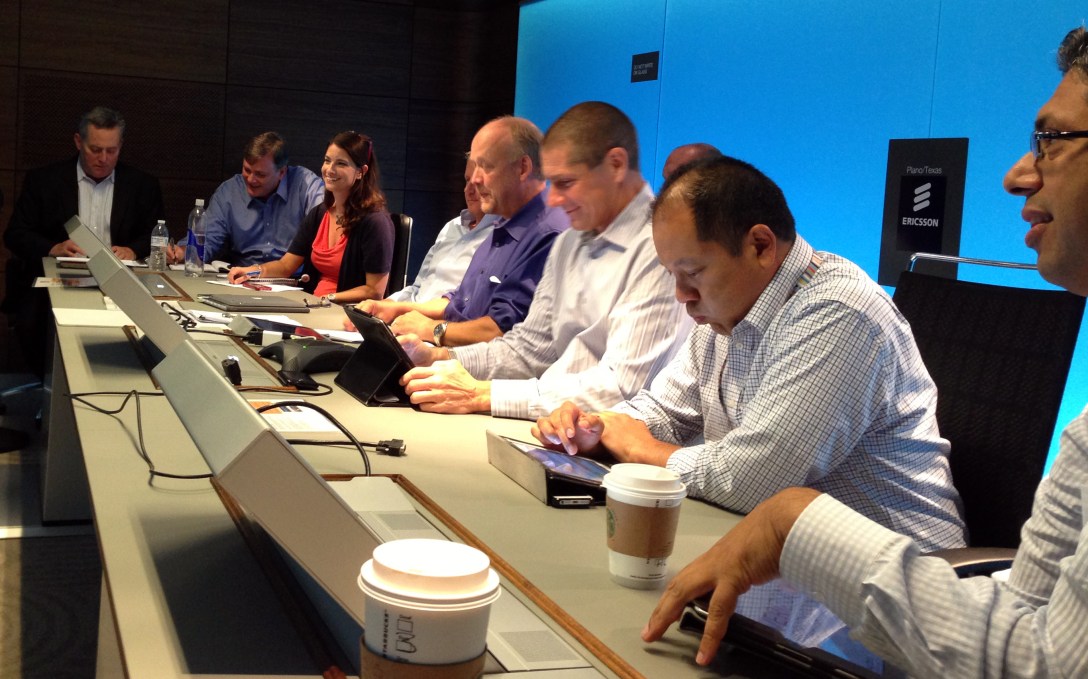
Business life in the city has developed around a strong service sector in a variety of enterprise segments. As the global market is reshaping the future of businesses in general, with advanced ecosystems and strong niche players, local city life will also change. So how does and will the cloud, collaboration and connectivity contribute toward creating competitive companies in cities?

The digital or networked economy is thriving on advanced ecosystems, with market makers and contributors all playing key roles. Large global players focus on providing powerful business platforms, to be broadly exploited. Local, niched companies focus on the segment that can be supported over the platform. As we move forward, technology will become essential in a variety of non-tech companies and here cross-company collaborations will be key.

A networked collaboration environment allows the service sector in a city to expand its collaborations beyond companies within or even close to that city. As a city business, you can collaborate with peers in other cities facing the same challenges. You can link up with niche specialists in other cities to address the missing links for your proposition. You can leverage best practices globally from leading niche providers. Last but not least, as a leader in your city, you can expand quickly.

With a complex ecosystem and many niche contributions, you are unlikely to meet many of your business partners in real life. You will instead meet them through networked brainstorming sessions using virtual whiteboards. You will meet them using videoconferencing tools in order to give your partnership a face. With fewer/vaguer borderlines between companies, you will see rapid adoption of video communication/collaboration with integrated project management tools – all enabled and powered by applications in the cloud.

My predictions for the future of cloud collaboration are:
– Cloud-based communication and collaboration will be mission-critical infrastructure for competitive companies in cities.
– Advanced ecosystems and niche players will create the foundation for your company’s expansion of offerings beyond your core skills.
– In addition to niche companies, the collaboration opportunities will open up new opportunities for young “cityzens” to collaborate as individual contributors in early stages of their careers.
– Video and shared whiteboards will move out of conference rooms and become basic tools in any collaboration room/screen.
– The collaboration needs will quickly move beyond rooms to contributors’ personal screens.
Time to Turn Trouble Tourist Thrilled

54. Time To Turn Troubled Tourists Thrilled - 1610 edited

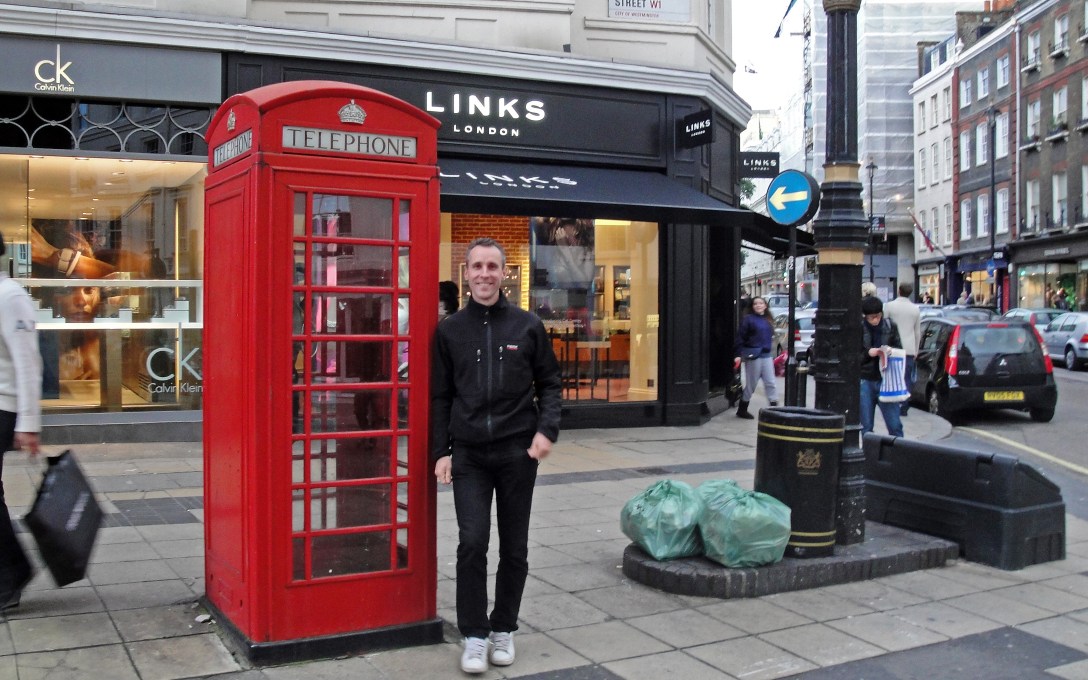
Most cities are dependent on a healthy flow of tourists exploiting what the city has to offer. As we enter a city in a new country, most of the smartphone data tools we use at home move into “restricted use” mode. We switch off roaming to save money. We hope for a Wi-Fi spot at the hotel, and we turn off “location” to save battery power. This “phone-box-like connectivity” is no longer good enough. So what could make life a lot easier for tourists with widespread and affordable access in the city?

The first issue we typically face as a tourist is to find our way around and to decide what to prioritize. We could enjoy our networked map while walking around. We want to know what is going on in terms of special activities and events – and have this information at our fingertips throughout the day. When we’re hungry, we want to see what the whole neighborhood has to offer. Maps and location-based services are key assets in these situations.

Public transportation is your extended feet in the city. Finding nearby bus and subway stops, getting timetables and buying tickets used to be exercises we did on paper. These are now digitized for locals. But the challenge for us as tourists is that we expect to have the same mobile data access we have at home. The operating model for taxis varies extensively, and where to flag a secure one down and how to pay is not always an effortless experience. And do not expect hotspots in these locations as standard when you need them.

Visiting new cities is a great moment for us to share our experiences. This sharing has gone from targeted text messages and updates on Facebook and Twitter to the picture and video age. We want to show what it really looked like; pictures of us in front of major landmarks and the snippets of life that become memories from our trip. We used to capture these moments with a camera and show digital or physical albums afterwards. In the Networked Society, we want to share them instantly where we are, and with the right geotag included.

My predictions for the future of networked tourism are:

– Turning off roaming and relying on hotspots only restricts the tourist experience of the city, and this will be a major negative when summarizing the trip as a whole.
– Proactive cities and operators will offer new solutions with universal access across the city, and tourists will accept certain application restrictions for their tourist package in exchange for an affordable price.
– Dedicated city apps will replace tour and brochure stands in the hotel when affordable connectivity is in place.

Location & LTE Lubricate Lively Lifestyle

© Peter Linder 2014 – All rights reserved

Widespread availability of location capabilities has enabled a range of new applications showing where we are. We also have applications allowing us to show which of our friends are in the neighborhood right now, without connecting in advance. The ability to share where we are and letting technology keep track of suggestions on who to connect with in real life here and now is transforming social patterns in the city.

We plan less in advance on what to do and when to do it. We let opportunities and the moment guide what we decide to do. These shorter decision cycles also raise expectations on instant appreciation for what we decide to do. If it is not good, we always have the option to shift to a new place or activity nearby. These social patterns represent a significant new factor for many businesses labeled as social meeting places, such as restaurants, cafes, bars, museums, stores and arenas.

A new lifestyle is emerging around applications that allow us to meet new people based on proximity of interests and locations. Who around me shares my interests and would be an interesting person to meet? Is anyone interested in sharing travel memories over a cup of coffee? Is there anyone else in this hotel who prefers company rather than eating alone tonight? This may not be adopted quickly by the middle-aged population, but it could become a new factor in the social life in the city for the younger generations.

Here are my predictions for the location/phone-enabled social life in the city:

– The planning horizon for social meetings will continue to shrink.
– Spontaneous meetings based on location, interest and mood will continue to grow in importance.
– Connecting first with a URL to meet soon ‘IRL’ will become an increasingly relevant scenario for how to make new social connections.
– Cityzens will be faced by more challenging privacy decisions on how much of their life to expose.

Coverage, Capacity & Capabilities Change City Climate

52. Coverage Capacity and Capabilities change City Climate  - 1610 edited

The evolution of networks will play a central role in the development of urban society. A network that delivers from A to Z on expectations with regards to coverage, capacity and capabilities is vital for turning urban populations into ‘cityzens’ of the Networked Society. I would argue that the urban network is the single most important piece of infrastructure needed for economic growth in a city. This is the first in a series of posts that will touch upon the following subjects introduced here.

Work & play
Lifestyles are transforming for locals and for tourists. Going forward, how do we thrill those visiting our cities, when location-based services and LTE are all widely available? How do we meet up with acquaintances in a city where fewer and fewer people plan social meetings in advance? The question is perhaps, what is required to power-up performance in public places in the city?

Similarly, urban business life and the service sector are in the beginning of a major innovation cycle. What role will networked collaboration play in re-inventing the service sector? How can the sales process in a city be revamped to support the evolution of small shops and food outlets? What will a modern restaurant look like if you spice up life beyond salt, pepper and free Wi-Fi? Will we work from office or home or will we see work developing around where we are?

Transportation & health
With cities becoming larger and larger, the focus is being placed on efficient transportation. How will air travel evolve and what about the door-to-door experience? How will parking and power infrastructures evolve to support a future centered on electric vehicles?

Finally, a major burden will be to take care of entire populations and secure their health. How can proactive activity-monitoring secure a more physically active population in the city? And how can we leverage the network to improve the situation for urban homeless people?

This subset of opportunities for cities in the Networked Society will be explored over the coming weeks, so stay tuned.

Coverage Challenges Completely Changed

App coverage -1610 Edited

Measuring coverage in mobile networks used to be easy when the bars on the screen told the full story. As the breadth of applications grows quickly, so does the need for new coverage measurements. Going forward operators need to be prepared that end-users will expect coverage for all their applications.

As a starting point for how to measure coverage per application, you can measure the coverage for three performance tiers, e.g. 100kbps, 1Mbps and 10Mbps. These tiers can be used to approximate the coverage for voice, data and video-centric applications. The evolution of mobile-data performance requirements are driven by the new needs from IP-based voice and video applications. According to the most recent Ericsson Mobility Report, the North American coverage for the three tier examples above are: 95%, 78% and 31% respectively.

End-user’s expectations for IP-based voice quality are defined by the mobile voice services we have today. Circuit-switched mobile voice services are known to be universally available and support uninterrupted calls with very high availability. These factors together with the new High-Definition voice capabilities have set the bar for IP-based communication services. The large-scale introduction of VoLTE is driving performance reviews and upgrades for the lower coverage tiers. In addition to voice communication, the application coverage for streaming music services is important to support.

The very high screen resolutions for smartphones and tablets make them prime targets for innovative video consumption services. Video coverage is defined by the higher performance tier and a quickly growing factor for redefining the most demanding coverage bar. Streaming video services can be buffered at both ends but require close to real-time performance when used.

In the past, we have assumed that a lot of the video consumption will be offloaded to Wi-Fi but the ultra-mobile use of smartphones and tablets means that video demand is highly realistic in areas outside hotspots as well.

Here are my predictions for the ‘App Coverage’ evolution:

– IP-based voice and video will set the performance bar for new coverage expectations on mobile data services.
– End-user demand for universal app coverage will require a more refined approach for measuring coverage.
– The current performance measures for mobile data, e.g. response times and download times, will be accompanied by already established quality of experience (QoE) measures for voice and video.

Perhaps the vertical coverage bars we grew up with will soon be complemented with horizontal app-coverage bars on our screens.

Time To Turn To Third Trajectory

49. Time To Turn To Third Trajectory - 1610 edited

The communications world has been based on two major business models – the voice model and the internet model. We are about to enter the third major business model era, and the change might be bigger than most players in the market expect.

The voice business model is based on minutes, and initially on a differentiation on location, in other words, local, national and international. The basic model is applied across both fixed and mobile voice. The voice business model did not support internet. It started to collapse for dial up data in the late 1990s, and a new model emerged with the large-scale introduction of DSL and cable.


The internet business model is based on mix of “all you can eat,” and the peak-rate-speeds and monthly-data-bucket alternative. The model was pioneered for residential internet and later adopted for mobile broadband. Users are used to a mix of freemium applications for the data paradigm. Business internet/intranet services have evolved from their FR/ATM/leased-line legacy. The internet model does not support the growing video/cloud services in the marketplace, where consumer value is not correlated with bits and bytes.

The video/cloud business model for the Networked Society is yet to be defined and a lot if innovation can be expected. Here are some important boundaries for this model:

* New traffic patterns from video- and cloud-based applications are defining the demands on next-generation communications infrastructure.

* New service paradigms enabled with software-Defined Networking (SDN) capabilities introduced in service-provider networks and tightly coupled to cloud data centers.

* Consumerization of business services and a migration to an increasingly mobile workforce.

* A new balance for end-to-end services, with connectivity providers and application providers needs to coexist and support each other.


My predictions about the creation of the Networked Society business model supporting a video/cloud-centric world is:

* A value based business model, diverting from the proven voice and internet models, where time/bits and volumes are key.

* It will be shaped from 2013 to 2015 in a few leading markets, for mass market adoption from 2016.

* It will be the business foundation for accelerating SDN/NFV introduction across fixed and mobile networks.

* It will contribute to major traffic shifts across LAN, metro and core networks.

This blog-post was originally posted September 20, 2013 on Ericsson’s Networked Society blog as: “The Third trajectory a new business model era for the Networked Society”.