Stadiums See Spectators Spontaneously Sharing Special Seconds

Our kids don’t understand why we brought lighters to concerts or how we shared the experiences from live events with our friends. What they do know is that the smartphone is an enabler for sharing all of their experiences, and events, whether they’re local or global.  This year, the Olympics will be a true networked experience, and to demonstrate today’s connectedness, more than 1,000 Wi-Fi access points have been deployed in London’s Olympic Park alone.

The spontaneous sharing of our lives has become the new norm. We record all our favorite moments whether we attend top-notch events like the Olympics or share our experiences when we watch our favorite national sports. We share our favorite songs when we’re at concerts, and pictures of our friends all dressed up in full fan costumes.

Sharing today is about distributing our favorite moments via video and multi-picture avenues, creating new traffic patterns, where uploading from the stadium dominates. We used to share our experiences with SMS, tweets or short status texts when the only coverage available was GPRS or EDGE. As 3G-, 4G- and Wi-Fi-enabled smartphones enter the stadiums in volumes, so does the demand for networks to support them.

Sharing the local experience while you are abroad is as important as the one you share at home. This is not restricted to sports and concerts, but also includes our desire to share our greatest travel experiences. I wonder when we will be able to go abroad, take pictures and post them in real-time without having to worry about the bill. I think it will be sooner than you think.

My predictions for the future of spectator sharing are that:

* Video and multi-picture posts will be our primary sharing media. Images speak louder than words.

* Major sports stadiums will have advanced networks for boosting data coverage and capacity within three years, and the upstream data-traffic needs will be a key network design criterion.

* New business model innovations will surface to allow us to cross country borders with the stadium-sharing behaviors we have adopted at home.
Mchn-Maaaaaaschiiiiiine-Mchn – Middle Man Matters

© Peter Linder – All Rights Reserved

Why most people miss the role of the world’s largest machine when predicting the future.


When Ericsson sold its 50 percent stake in Sony Ericsson to Sony, a common question to Ericsson employees was: “What do you do now that Sony has bought your company?”


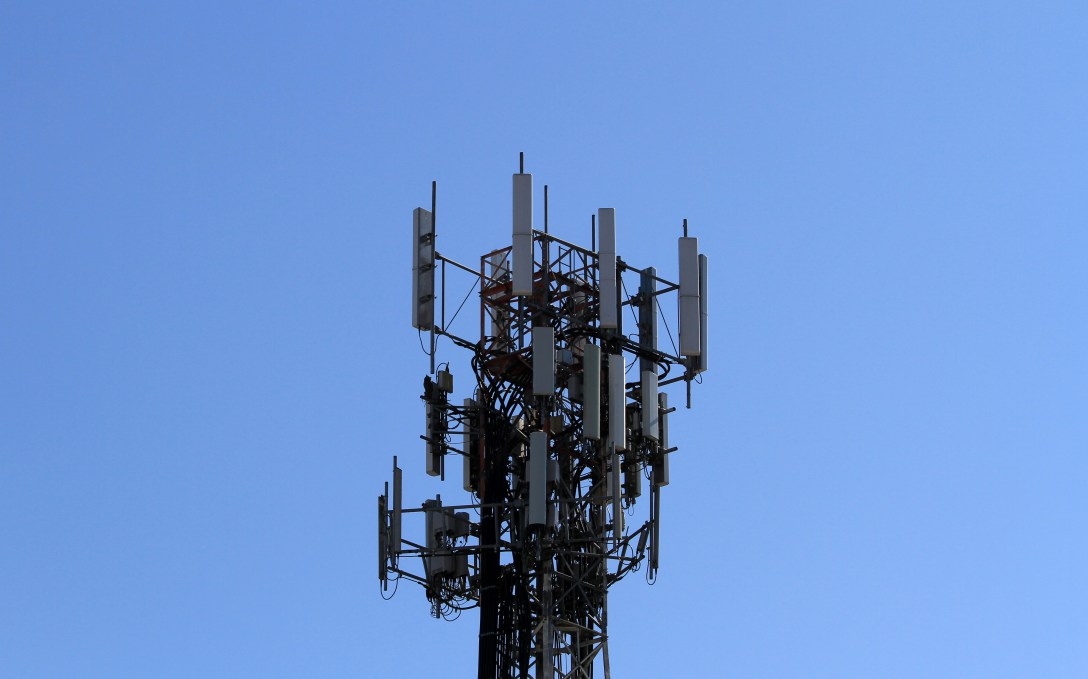
Not all people I meet understand my explanation about what a mobile network is and does. I believe the term “network” is too abstract a concept for most people, even if we keep it simple and say it’s the internet’s backbone and mobile-access network.


In addition, the communications industry sometimes talks about the future in terms of machine-to-machine (M2M) communication and industry verticals. The seven letters that make up machine are used to outline the future of servers and applications at one end, and the future of devices at the other. The magic “2″ refers to the largest machine of them all – the network.

Most people get the idea that there is a machine somewhere working away so that 5 billion people can talk, SMS/TXT and send data to one another. They do not reflect on how this machine is changing so it can transform all the industries around us into smart industries. So how do we get traction with such ideas if the majority of society believes mobile phones communicate with each other like walkie-talkies; in other words with just air between them and no network?


The following examples highlight the role of the network in all society stakeholder groups:


* When breaking mobile-broadband networks into two main parts – the internet backbone and the mobile-access network – most people follow the discussion on what a network is all about a lot better.


* Machine-MACHINE-Machine is a better expression regarding the evolution of the communications industry. This makes it clear to all society stakeholders that there are three fundamental machine developments in play.


* The network plays a vital part in making vertical industries “smart”, and smart industries require smart networks.


* Significant network investments are required to support 50 billion devices across new industries, way beyond the requirements that brought voice and data services to 6 billion mobile phones.


I think the following vital questions need to be asked when discussing the networks in the Networked Society:


* How do we secure the investments in network capacity and coverage to keep up with the demand from the Networked Society?


* How do we create new business model innovations across industry borders so all key stakeholder groups benefit?


* How do we secure regulatory frameworks that promote rather than prevent network innovations?


All of the above are complex issues. The resolution requires a broader understanding in all society groups about what the role of the network is, as it will remain THE enabler for the Networked Society.


Turn to Transformation – Transpiration Too Tedious

When do legacy 20th-century network elements stop being an asset?

Sweating your legacy network assets has been a popular strategy among providers of legacy voice and data services. The combination of low revenue growth and a desire to avoid additional investment has resulted in many transformation strategies ending up in a binder on a shelf, often together with their counterparts from previous years– but this is about to change.

In the late 1990s, Y2K transformation projects intended to prevent the disasters that might occur when computing systems made the transition from 1999 to 2000 were carried out in a frenzy. The business cases behind them were not based on revenue upsides; instead, these projects were intended as protection against the risk of a negative impact on society.

In the case of many 20th-century legacy network elements, it will soon no longer be an option for operators to sweat these assets further. The trigger for investments in transformation projects is likely to be a change in perspective about what that transformation should deliver.

It’s not only about the fantastic scalability that Internet Protocol version 6 (IPv6) will deliver, it’s also about avoiding the limitations of Internet Protocol version 4 (IPv4) and the high opex that will be generated if operators have to use a variety of migration solutions.

As had been feared, the world did run out of IPv4 addresses last year. Companies that needed them had to buy them secondhand. Few other industries buy vital parts for their products and services on the grey market. More aggressive IPv6 transformation strategies will simplify IP networks over time.

It’s not only about transforming Plain Old Telephony Services (POTS) into multimedia communications– it’s also about being able to deliver basic voice services in 2015. Old telephony systems are reaching the end of their physical lifetimes. The necessary support staff are about to reach retirement age.

However, high-quality communication services remain as relevant as ever and will remain vital for the business of any service provider–and they’ll be a fully functional part of the Networked Society.

Since the 1980s, fiber has been touted as the access method of the future, but the trend is moving more toward a copper phase-out than a fiber overbuild. Opex savings can only be realized when the copper network has been phased out. When the two technologies exist in parallel, operators face what’s known as the double-opex dilemma. Looking forward, fiber will replace copper wherever economically feasible, but when it isn’t, radio could be the technology that replaces copper in other parts of the network.

In the future, I expect to see the following trends:

• Transformation strategies will replace the strategy of sweating your assets as the mainstream approach for dealing with legacy voice and data networks
• Copper-network phaseouts will be required to bringabout the full financial and societal benefits ofadvanced fiber and radio builds
• Network transformation projects will take about five to seven years and will be implemented in multiple stages, similar to the process of renovating a house room by room over many years
• Building the foundation is a long-term vision; it’s important to take a holistic approach to network architecture and to use transformation strategies that can be easily replicated.

Phenomenal Photography – Picture & Publish

The first 10 years of mass-market digital photography have gone well thanks to innovations in mobile phones, single-lens reflex (SLR) and point-and-shoot cameras. The classic Kodachrome film has been discontinued. What can we expect from networked photography going forward?

Camera innovations have been phenomenal. Smartphones have made integrated photography and networking capabilities a great way of taking and sharing pictures –think Instagram. SLRs have managed the transition from film to memory with maintained or increased picture quality. Integrated HDTV (High-Definition TV) recording capabilities have turned SLRs into multi-purpose photography and filming devices. Point-and-shoot cameras have very high picture resolutions in combination with advanced optics at affordable prices.

The almost real-time publishing of our magic moments is a reality. It is an integrated part of the tools we use for sharing our lives. The darkroom and dark rooms are no longer required for viewing high-quality photos. Neither is the long wait for a roll of film to be processed. Our ability to share pictures, and share them instantly, is here to stay.

Post-production capabilities and their superior results are light-years ahead of the darkroom days. This is also the case for memory-storage innovations; the past decade has resulted in a 1,000-fold price-performance improvement and support for very high writing speeds. The revolution from 24 or 36 frame film rolls and the first 8-16MB memory cards feel very remote.

In the future, I expect to see the following trends:

  • High-resolution photographs and moving pictures will become key to the next wave of social-media innovations
  • Networking and camera capabilities will become more unified, and integrated WiFi and mobile access will become standard in SLRs and high-end point-and-shoot cameras
  • The camcorder will have a hard time surviving as a mass-market device, as cameras and smartphones come with integrated HDTV recording capabilities

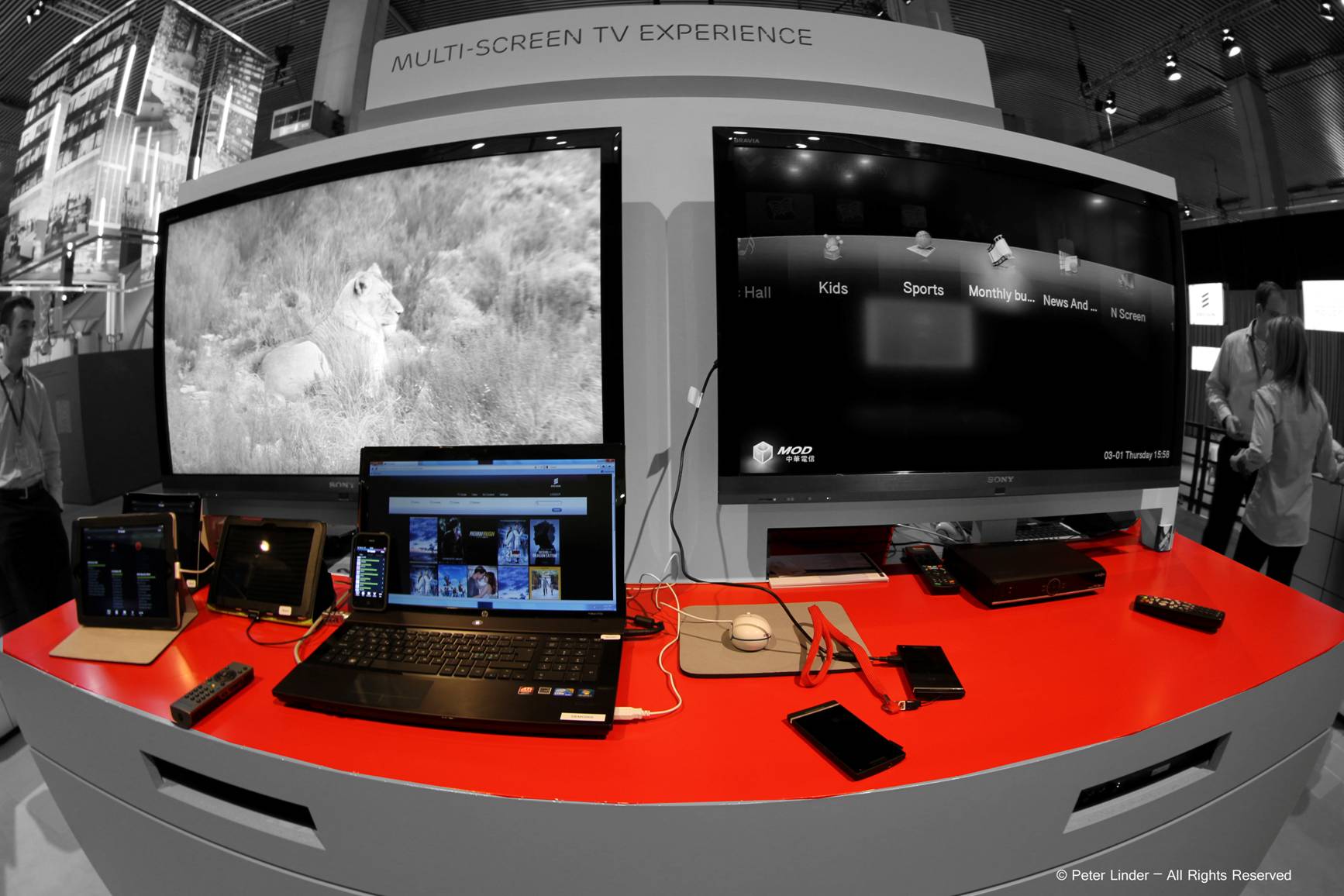
Flatscreens find fantastic furniture fit

Buying a TV was easy when it was all in one piece– when all you had to worry about was whether you should put it on a TV stand or hang it on the wall. But now innovation is being taken to the next level as key TV and audio technologies are being integrated with furniture, resulting in some interesting hybrid solutions.

As we move towards the Networked Society, technology-savvy products are being combined with products from other industries to form cross-industry solutions to everyday problems. This has been demonstrated with IKEA’snewUppleva (“experience”) solution, recently launched in Europe and scheduled for a US launch next year. With Uppleva, multimedia technology and furniture are combined in a way that ensures the product looks good both when it’s on and when it’s off . Cross-industry collaborations like this one are becoming increasingly important.

Today, creating a multimedia experience in your own home is often quite complex. Basically, you either need to be a genius or you have to get support from one to put it all together, even if you’ve bought all the components from the same store. The installation and service activation is the easiest part, the lifecycle management of the solution the more cumbersome part.. After a long day at work, who wants to take on this 24/7 role to keep their family connected? Pre-integrated solutions based on well-conceived platforms can simplify our lives a lot.

You can no longer wow your neighbor simply by buying an HD-quality flat TV. We now take it for granted that TVs come in almost any size we want, and at an affordable price. BluRay players and 7+1and 5+1 audio systems are amplifying the experience of today’s TV viewers. So are wireless access to subwoofers and loudspeakers, and today’s advanced storage and streaming solutions– not to mention the growing number of HD-capable recording devices. All of these additions serve the individual in the Networked Society as we become both producers and consumers of a new kind of home entertainment.

In the future, I expect to see the following trends:

  • Cross-industry innovation across historical industry borderlines will be the norm in the Networked Society
  • Large digital screens will continue to play a key role in delivering our multimedia experience, although we have reached the point where simply expanding the size of the TV is no longer enough
  • Manufacturers of full custom solutions and best-of-brand approaches are encountering competition from the makers of flexible holistic-solution offerings, in which the technology features are complemented with design, ease of use and life cycle management as key buying criteria. criteria

Scalable, Smart, Superior and Simple: Soon Society Standards

Without a fully-fledged network, society and operators can’t reach their full potential. The network must be optimized to manage the enormous communications transformations taking place in society. And to achieve this, they will need to focus on four key attributes.

First, networks need to be scalable to support: traffic growth cost-efficiently; a growing amount of devices,  new types of them; and signaling to and from devices.

Second, networks need to be smart. Smartphones do not work well together with dumb pipes; and neither do other devices or services. Being smart allows networks to have differentiated connectivity options – and provides application programming interfaces with enhanced applications that have vital service attributes. A smart network is the foundation for delivering higher value to users and service providers. And business model innovation requires smart networks.

Third, networks need to deliver superior performance. As applications and services become more and more similar, superior network performance will be the key differentiator between operators, from a coverage and capacity perspective.

Finally, networks can be significantly simpler than they are today. In IP networks a lot of products are built with a single purpose. Tomorrow, a collection of single-purpose products will be consolidated into a more powerful, more capable multi-purpose product platform.

I believe that future networks  can be predicted as follows:
* Mobile applications will set the network evolution/architecture agenda.
* Triple-network integration will gain traction; in other words, 3G/4G/Wi-Fi will all become part of the same wireless access.
* Network transformation will take over from network transpiration as a primary network strategy. Sweating too many old network assets could be risky if and when the competition transforms its networks.
* With stronger network visions and business models, investment appetite will increase globally.