Waikiki Welcome Workation World

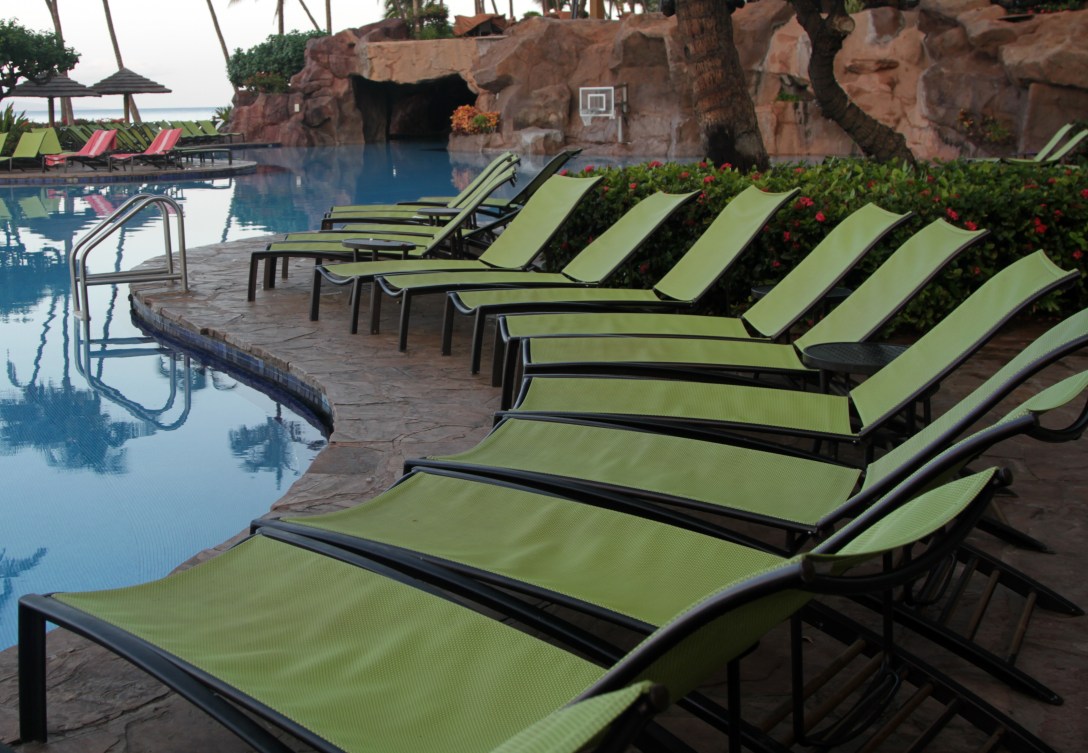
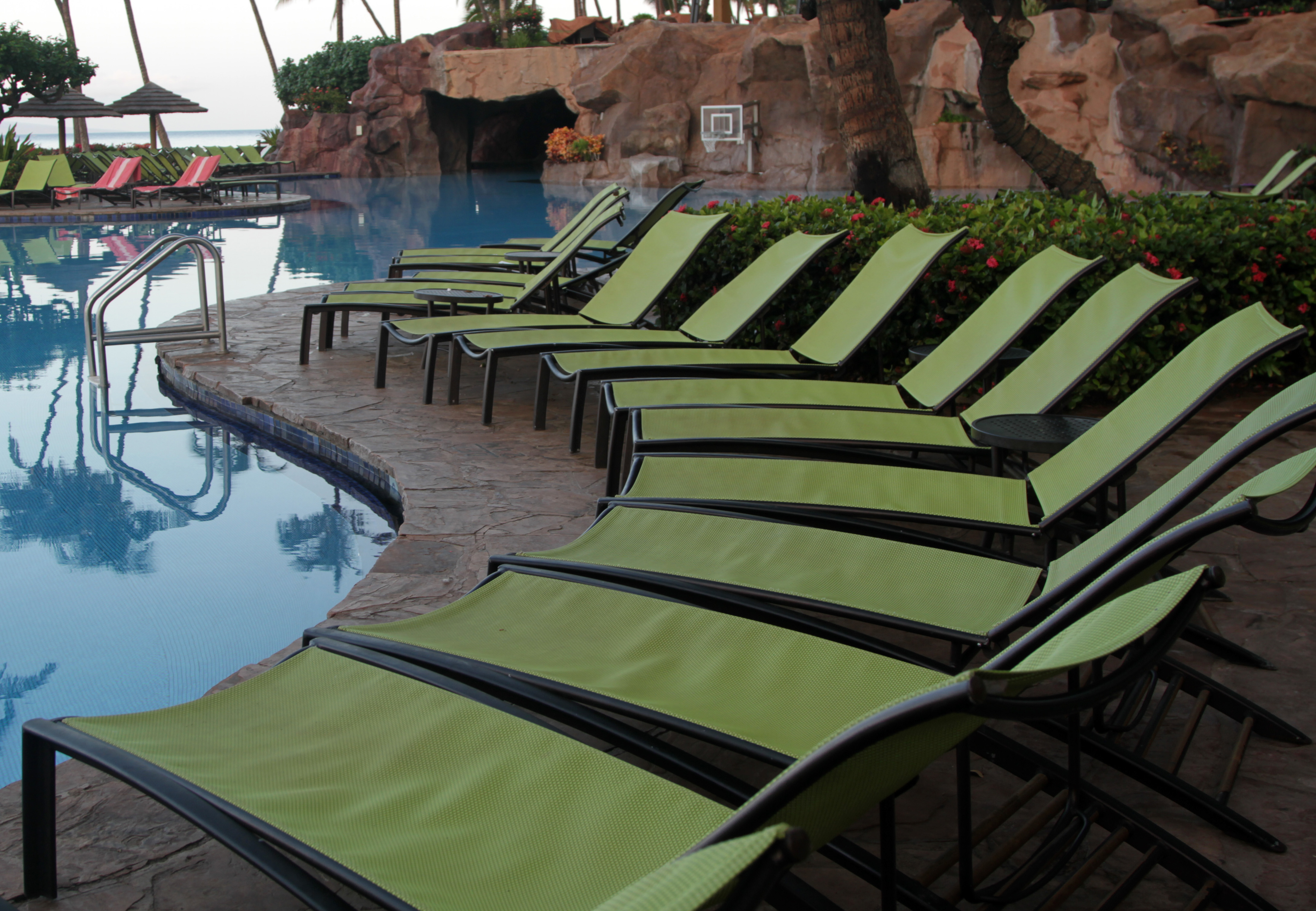
Waikiki Workation WeekEvery holiday season sees a population surge at popular beach resorts. In the past this meant throwing out a towel early to get a pool chair, bringing a good book to relax with, and filling in the out-of-office message before leaving work. But hotels are starting to see very different needs emerging around their pools.

Your family might be the kind where all the members go on vacation and enjoy the full benefits of it. Or you might be the kind of family where one of you had to go on a “workation” to be able to get away. Or you might be a single traveler in either category. What you all have in common is that you now put your devices in your pool bag together with your sunscreen and glasses.

E-readers are challenging the pocket paperback as the way to relax with a book. Smartphones with their social media applications are as common as pool towels. Magazines are hanging in there, but are being challenged by tablets and e-readers. Kids play games on tablets. A few workaholics bring their laptops. We used to stay by the pool until we had to eat. Now we stay there until we are out of device juice and have to go and recharge our batteries.

Last year, MIT demonstrated a solar-powered lounge chair that offers a bit of shade and an integrated USB charger, with solar panels on top connected to power outlets in the chair. So which hotel will be first to deploy these or classic pool chairs with USB outlets to offer power by the pool? A drink might not be the only juice we will demand in the future.

My predictions for the future are:

• Devices by the pool are here to stay

• Pool chairs with power outlets will be here within the next two years

• “Workation” might sound awkward, but is a growing user need for hotels to support

• Mobile coverage by the pool and in the room is an important deployment scenario for heterogeneous networks


Coverage & Capacity Choice

33. Coverage and capacity crossroads

Operators that are preparing for small-cell deployments face a strategic choice between revenue growth and cost-reduction strategies. ‘Growing Green’ is a proactive strategy for growing mobile-data revenues through superior networks at business premises. ‘Reducing Red’ is about capturing low-value data traffic at a low cost in areas that have mobile coverage and capacity limitations.

Revenue growth strategies for small cells can be characterized in a number of different ways. First, they focus on business locations where the employer’s business, rather than their employees, is transforming to leverage the potential that ’smart’ and ‘mobile’ solutions can deliver. Second, the commonly used devices (including smartphones and tablets) are the same that we use privately but have unique application and network requirements beyond what classic best-effort data-services deliver. The third characterization has a clear potential to deliver incremental revenues in exchange for superior network services. Fourthly, this strategy addresses both the mobile voice and data needs that are realized through networks incorporating a mix of 3G, 4G and Wi-Fi.

A vital insight is that smart industries rarely fall in love with dumb networks even though they date and romance a bit in the beginning. ‘Growing Green’ includes a broad variety of scenarios, including networked offices, networked retail, networked manufacturing, networked warehouses, networked hotels, networked arenas etc.

The cost-reduction strategies look similar at a first glance but have different goals. First, their main objective is to increase coverage and/or capacity at the lowest possible cost. Second, control over Quality of Experience (QoE) is not critical and can be relaxed from mobile network quality standards. Third, the business model is built around no or low incremental-revenue potential but with a strong churn-avoidance profile. Fourth, this strategy is data-centric and is often realized with single radio technology, such as Wi-Fi, or through multiple-radios decoupled from the macro network. ‘Reducing Red’ scenarios address the same issues as above.

‘Growing Green’ and ‘Reducing Red’ are viable and likely deployment strategies. Operators are likely to mix both. The primary difference is in the network-build approach. ‘Growing Green’ involves a higher level of ambition upfront for network design, types of equipment used and installation models that are optimized for minimized operational cost and for high network availability and control. ‘Reducing Red’ minimizes network design, allows for equipment with reduced service-delivery requirements and is optimized for zero-touch installation. This minimizes initial capex but adds cost in the areas of support and life-cycle management.

My predictions for the future are:
• Both ‘Growing Green’ and ‘Reducing Red’ will be considered for pure Wi-Fi as well as 3G/4G/Wi-Fi small-cell deployments.
• ‘Growing Green’ strategies will gain traction where the network is serving businesses in transition towards a smart business.
• ‘Growing Green’ strategies are built on the foundation that mobile is or will soon be the primary connectivity for premises with a reduced role for the fixed LAN.

When Will Wireless WOW! Worlds’ Workers

Outrageous offices

In business environments, the initial wave of WiFi deployments has been a complement to a fixed LAN. Enterprise WiFi used to be associated with extensive network planning and advanced services, but has gradually transitioned into a best-effort game where capacity is increased by adding new nodes rather than by network design and optimization. These principles have also been applied for the first wave of Femto cells as a fixed line extension.

As employees become increasingly mobile, the question has arisen how long the Fixed LAN will remain the primary infrastructure? The cost of technology is decreasing, and feeding 100 small cells with 3G/4G/WiFi, floor space of equipment rooms can be reduced just as power, cooling, and wiring, compared to an Ethernet port at every desk plus WiFi. We are getting closer to the point where the mobile/wireless network can become the primary business-premises network.

A WiFi or small-cell network intended to be the primary infrastructure will need to fulfill tougher performance requirements. These requirements are above what made WiFi access points and Femto cells popular as a secondary access technology, and they will determine whether businesses will prefer to deploy mobile/wireless as the primary or secondary infrastructure. Hence, they will determine businesses’ future demands on their IT and network partners.

For new business premises it seems obvious to build for small cells from day one. This includes designing premises’ networks for fiber, and for power to be terminated at the optimal small-cell location. These locations should be close to the ceiling rather than the floor to ensure effective wireless coverage, which actually is contradictory to the current norm for power, phone and Ethernet outlets. LAN closets might be kept for an interim period of time, but they should be designed to enable easy conversion of the floor space into working floor space. And finally, if leasing power and cooling solutions the constructor had better secure a short-term leasing contract.

My predictions for the future of mobile/wireless networks for professional use are: * The rapid adoption of mobile devices and even more mobile ways of working are driving the need for mobile/wireless to become the primary access method. * Fiber distribution within a building to small cells supporting WiFi/3G/4G becomes the norm for network infrastructure across all knowledge worker segments. * The extensive availability of legacy CAT3 (phone) and CAT5 (Ethernet wires) can be used as stop-gap solutions, provided termination points are located to minimize need for new/extra wiring


Data Define Daytona Drivers Destiny

daytona

Modern Race Cars performance is increasingly dependent on the continuous and rapid collection, interpretation and analysis of very large amounts of data.

A few weeks ago NASCAR teams held their Daytona pre-season thunder to fine tune their new cars. But what does NASCAR evaluate and how do the race car teams get the race car performance data to and from the track to their headquarters?

Car racing today is about outperforming your competitors on very small details. Chassis and engines are similar and 1/100 and 1/1000 of seconds are chased in the detailed tuning of tire pressures, angles, suspension and aerodynamic details. This year, NASCAR is introducing a completely new generation of a car. Understanding how the new car will behave on the track will be critical for success.

As a complement to regular measurements, teams this time used action cameras placed in strategic locations on the cars for filming during testing. Cameras were placed by the side pods, close to the ground, under the floor to capture the rear suspensions, and in the wheel houses to watch tires in action. The films provide high resolution views and details on how the car performs. (Filming is only allowed during testing. During practices and the real race, data is collected from various sensors.)

All data generated from the filming is analyzed after each session. Some data can be analyzed at the track, some needs to be sent to team headquarters for analysis. Most teams use laptops with wireless data cards and rely on the mobile network for transmitting the data. Ericsson sees large spikes in upstream data traffic from the teams immediately after a filming session has been completed. This raises the bar on network performance, its reliability and throughput, so no time is wasted in order for the teams to get their data analyzed.

My predictions for the future: * Telemetry data from race cars will continue to grow quickly and is a good example of how the Big Data movement is affecting racing.

* High Capacity Network access at race tracks will grow in importance, the faster the results can be delivered from the track, the better the teams can prepare their cars.

* With more and more applications moving from PCs into the Cloud the Network becomes ever so critical.

…and just because I like it, here’s the film again!

COWs – Cruising Cells Complement Classic Celltowers

Cellular-on-wheels-465x300Mobile networks are built around a fine-tuned grid of towers that host base stations. These serve the basic mobile voice and data service needs of society. However, now and then the demands on the network peak temporarily and the current network capacity is inadequate.  Since the need is temporary, a permanent densification solution would be an overkill.

The solution is to make the mobile network itself mobile!

A Cell on Wheels, a “COW” is a complete mobile base station including radio antennas and backhaul placed on a truck. They are used to support major events requiring a temporary mobile solution. Multiple COWs can be deployed to boost network capacity extensively. COW’s are today primarily deployed in the events of natural disasters and at premium sports events, both of which require quick and temporary high network capacity.

NASCAR is one example of a sporting event requiring COW’s. In order to support the 39 annual NASCAR events, 10 COWs are on tour with the race teams. Without these COWs and crews, the mobile screens of fans would be dark for both tailgating and possibly the race event itself. Check out this NASCAR video to get a hint of the benefits.

Another alternative solution to COW’s are the installation of a permanent antenna solution at the venue, known as a Distributed Antenna System (DAS). DOW’s or “DAS on Wheels” systems are marvels as they eliminate the engineering needs for antenna design and deployment – the solution complexity is now reduced to radio and transmission equipment.

There is an emerging third tier for even smaller configurations. These are COLT’s or “Cell on Light Trucks” which enable even faster capacity augmentation at sporting venues and disaster recovery support.  Because they can be deployed in larger volumes and much closer to potential disaster zones, they are extremely economical as well.

My predictions of the future are: * Mobile units are becoming an integrated part of the densification strategy for a mobile network. * The evolution and diversification of the original COW into DOWs and COLTs make it possible to support a variety of deployment scenarios. * As Sandy recently proved, Mobile units play a key role in disaster recovery situations given the primary need to bring up mobile communications first. * Future concert and sports venues without voice and data coverage will struggle to attract fans as the future of live events is about the integration and access of live and multimedia coverage

Retail revolution Require Reliable Radios

Retail Revolution BW


Transformation to a fully networked retail concept requires a fundamental rethinking of the network needed to support new retail processes and consumer behaviors.

The retail industry is exploring new areas such as the store of the future, how smart shelves can improve the supply chain, and in transforming the buying experience. The main focus so far has been on achieving a tighter integration between mobile payment systems and consumer behaviors but what role will heterogeneous networks play in creating the networked retail experience of the future?

The first wave of networked stores has eliminated checkout cashiers, introduced product specialists in the back, and enabled staff to focus on helping consumers buy the right products. The backroom store of the internet already attracts knowledgeable customers and serves as a warehouse carrying the full product portfolio with all possible configurations and variations. The networks that support this are often based are leased lines to the store and traditional wireless LANs on the premises.

It is easy to pull this off with a couple of network wizards in the back of the store, but this is not always the case. Expansion into a fully networked retail concept requires a fundamental rethinking of the network needed to support this transformation. The network must support busy weekend hours and must work smoothly without support from on-site staff.

Reliability and the zero-support of a networked retail experience are driving the development of heterogeneous networks in shopping malls in a new direction – away from best effort wireless and legacy copper backhaul infrastructure to small, ultra-reliable WiFi/3G/4G cells with fiber backhaul.

This is only just the beginning so my predictions for the future are the following: * There will be a shift in focus, especially for shopping mall developers, from networks that primarily support the buying experience to networks that optimize the selling process as well as the buying experience. * Store owners and mobile network operators will form partnerships in order to realize their networked retail visions. * Mobile offload solutions for in-mall traffic will be replaced by in-store revenue securing mobile network environments for multiple radio technologies. * Paper-based retail tools such as in-store promotions, credit card slip management, etc., will lose traction to large digital promotional screens and more extensive use of tablets, phablets and smartphones by both sellers and buyers.