Where Will Worlds’ Wireless Workers Work?

58 Where Will Worlds Wireless Workers Work - 1610 edited

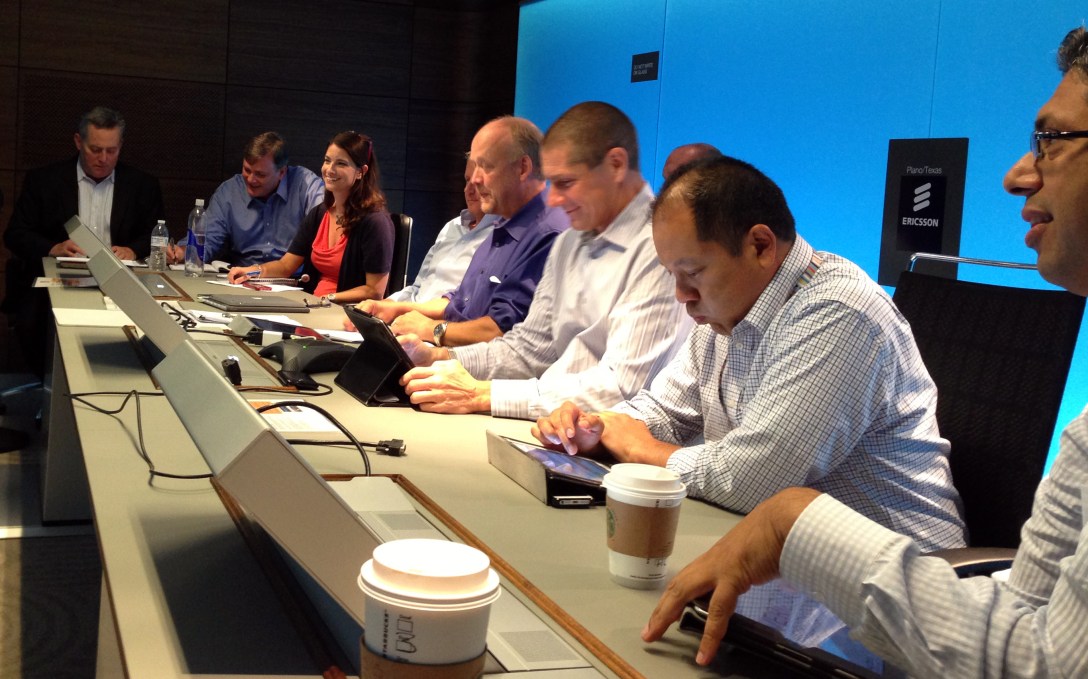
Work has forever been a task associated with a distinct location – the workplace. Many professions, dependent on a phone and PC as primary tools, have changed allowing the possibility to work from alternative locations like the home. The service-centric professional life in the city and widespread availability of tablets and smartphones allow for many tasks to be executed wherever you are. So, how prepared are you for the “here-office” reality?

The services and sales sectors have embraced mobile devices extensively. Initially, the applications have been e-mail and interaction-centric. However, the mobilization of existing online service and sales processes is reshaping what “cityzens” will work with – and where they will work – in the future. Remote access to e-mail was a revolution, and now we are about to enter the next one.

The office is becoming more and more mobile. Expensive floor space in urban areas calls for a continued reduction in office space per employee. Many professions require work to be executed at clients’ locations. Lengthy urban commutes represent valuable work or leisure time, which could be used more efficiently. The sum of all these factors is pushing work out of both the office and the home to ever newer locations.

This evolution makes ubiquitous coverage and capacity a central question in the city. The professional applications and evolving use cases represent the largest untapped potential that network enhancements can serve. “Cityzens” will take it for granted. Employees need it to drive productivity, and the urban society cannot develop up to its potential without it.

My predictions for the future of the “here-office” are:

– More and more work tasks will be executed outside the office and home locations.
– The mobile working standard for a globetrotting salesperson today will penetrate more and more service sectors in the city.
– Increased coverage and capacity for a mobile-device-centric working environment will be vital for societal development in the city.
– The combination of HSPA (urban/suburban coverage), LTE (urban capacity) and Wi-Fi (device availability) will shape the future wireless access networks.

Residents’ Real Restaurant Rewards

57 Residents real restaurant rewards

Restaurants are an important part of social life in the city, where stressed “cityzens” frequently choose an outing instead of cooking at home. Having Wi-Fi in the restaurant and social media “likes” are just as important as the menu for attracting visitors. So, what is essential for owners to consider as they take their concepts toward into a networked environment?

Many restaurant visits are decided at the last minute – usually as you are walking past a place that looks interesting. You know the neighborhood where you live, but you might be open to suggestions for places that are close to where you are. It is therefore central for restaurants to expand their attraction power beyond what we see physically to what we can see on our screens.

In many cases we know where to go, we just need to book a table. We might have difficulties in selecting an exact time in advance. We are also reluctant to take the 30-40 minute wait upon arrival. In this respect, it would be preferable to be able to secure a table on short notice by making the booking through a mobile app and then enjoying an aperitif elsewhere.

As the lifetime of menus becomes shorter and shorter, restaurants are keen on promoting their chosen ingredients in an effort to assist guests in the decision-making process. And with the trend at restaurants moving towards ‘Menu of the Day’ the next innovation will be to exploit tablet menus in close collaboration with what is going on in the kitchen during preparation.

Credit cards have been basic currency in restaurants for a long time. But mobile payments are moving in and opening up the doors for follow-up promotions for your next visit. Being able to monitor payments, owners can track how their online marketing is paying off. The current restaurant infrastructure for Wi-Fi and payment systems can be outsourced, and owners can focus on their new dining experience.

My predictions for the future of networked restaurants are as follows:

– Multiple restaurant processes (marketing, booking, menus and payments) can be re-engineered for a better dining experience.
– Wi-Fi for visitors is just one step toward the networked restaurant, where the following steps are more mission-critical and tied to the restaurants’ own operational processes.
– Restaurants will require highly reliable networks to realize their potential beyond what a typical restaurant Wi-Fi network delivers.

Smartphone Selling, Significant Small Store Shift

56. Smartphone Selling Significant Small Store Shift - 1610 Edited

Running a coffee shop or a food stand that attracts customers during morning rush hour or during busy shopping times used to be about securing volumes and shop location. Marketing started as a way of creating brand awareness and used to happen when customers saw your shop and then decided to come in and make a purchase. That world is quickly changing however in the era of networked shopping.

Shop owners today can extend their marketing zone from that first visual content to now, when potential new customers show up in proximity of their store. Shops can extend promotions to frequent customers as soon as their location matches a given store. If you are in an unfamiliar area, you can even get navigational assistance to your favorite shop nearby. By extending marketing from the time you see a shop to now where that shop can “see” you nearby, increasing the effectiveness of marketing significantly.

This is especially relevant for city shoppers – aka ‘cityzens’ – who can benefit from receiving superior offerings, relevant to them here and now, from the shops they prefer. Smartphones become the bridge between online marketing and in-store purchases. Daily specials can be considered before determining which shops to visit. This new marketing model is suitable for both food and merchandise shops.

In addition to changing the marketing process, the payment process is being impacted by new innovations. Paying directly with your phone is being introduced on a broad scale. Credit card validation is central today in determining what IS/IT capabilities to deploy. The change in the payment capabilities is a key part of the transition to networked stores. Perhaps the most interesting aspect of this trend is the broad applicability. It is not about luxury goods stores, this is relevant for any shop in the Networked Society.

My predictions for the future of networked shopping are:

– Stores will leverage location technology for marketing to attract ‘cityzens’ nearby before they even see the shop.
– Smartphones will be the device involved in the target marketing process.
– In addition to marketing changes, shops will complement their payment infrastructure to support payments through phones directly.
– The IS/IT capabilities will change to support the new era of “in-line shopping”.

To learn more about In-line shopping, have a look at this report from ConsumerLab

Cloud Collaboration Create Cities’ Competitive Companies

55. Cloud Collaboration Creates Cities Competitive Companies - Edited 1610

Business life in the city has developed around a strong service sector in a variety of enterprise segments. As the global market is reshaping the future of businesses in general, with advanced ecosystems and strong niche players, local city life will also change. So how does and will the cloud, collaboration and connectivity contribute toward creating competitive companies in cities?

The digital or networked economy is thriving on advanced ecosystems, with market makers and contributors all playing key roles. Large global players focus on providing powerful business platforms, to be broadly exploited. Local, niched companies focus on the segment that can be supported over the platform. As we move forward, technology will become essential in a variety of non-tech companies and here cross-company collaborations will be key.

A networked collaboration environment allows the service sector in a city to expand its collaborations beyond companies within or even close to that city. As a city business, you can collaborate with peers in other cities facing the same challenges. You can link up with niche specialists in other cities to address the missing links for your proposition. You can leverage best practices globally from leading niche providers. Last but not least, as a leader in your city, you can expand quickly.

With a complex ecosystem and many niche contributions, you are unlikely to meet many of your business partners in real life. You will instead meet them through networked brainstorming sessions using virtual whiteboards. You will meet them using videoconferencing tools in order to give your partnership a face. With fewer/vaguer borderlines between companies, you will see rapid adoption of video communication/collaboration with integrated project management tools – all enabled and powered by applications in the cloud.

My predictions for the future of cloud collaboration are:
– Cloud-based communication and collaboration will be mission-critical infrastructure for competitive companies in cities.
– Advanced ecosystems and niche players will create the foundation for your company’s expansion of offerings beyond your core skills.
– In addition to niche companies, the collaboration opportunities will open up new opportunities for young “cityzens” to collaborate as individual contributors in early stages of their careers.
– Video and shared whiteboards will move out of conference rooms and become basic tools in any collaboration room/screen.
– The collaboration needs will quickly move beyond rooms to contributors’ personal screens.

Time to Turn Trouble Tourist Thrilled

54. Time To Turn Troubled Tourists Thrilled - 1610 edited

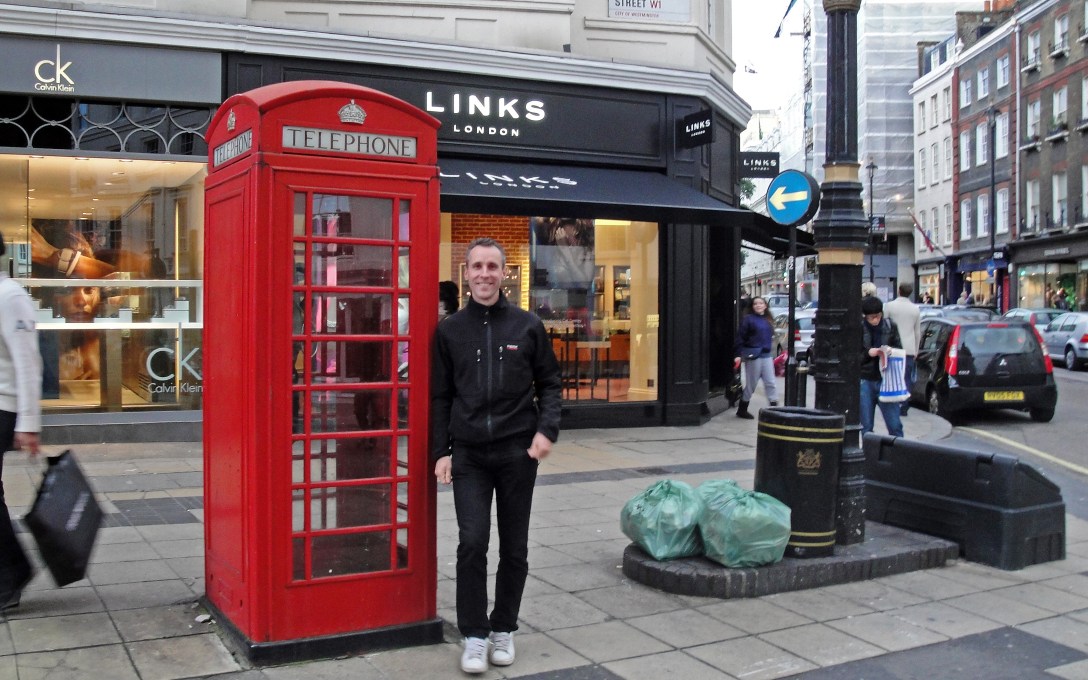
Most cities are dependent on a healthy flow of tourists exploiting what the city has to offer. As we enter a city in a new country, most of the smartphone data tools we use at home move into “restricted use” mode. We switch off roaming to save money. We hope for a Wi-Fi spot at the hotel, and we turn off “location” to save battery power. This “phone-box-like connectivity” is no longer good enough. So what could make life a lot easier for tourists with widespread and affordable access in the city?

The first issue we typically face as a tourist is to find our way around and to decide what to prioritize. We could enjoy our networked map while walking around. We want to know what is going on in terms of special activities and events – and have this information at our fingertips throughout the day. When we’re hungry, we want to see what the whole neighborhood has to offer. Maps and location-based services are key assets in these situations.

Public transportation is your extended feet in the city. Finding nearby bus and subway stops, getting timetables and buying tickets used to be exercises we did on paper. These are now digitized for locals. But the challenge for us as tourists is that we expect to have the same mobile data access we have at home. The operating model for taxis varies extensively, and where to flag a secure one down and how to pay is not always an effortless experience. And do not expect hotspots in these locations as standard when you need them.

Visiting new cities is a great moment for us to share our experiences. This sharing has gone from targeted text messages and updates on Facebook and Twitter to the picture and video age. We want to show what it really looked like; pictures of us in front of major landmarks and the snippets of life that become memories from our trip. We used to capture these moments with a camera and show digital or physical albums afterwards. In the Networked Society, we want to share them instantly where we are, and with the right geotag included.

My predictions for the future of networked tourism are:

– Turning off roaming and relying on hotspots only restricts the tourist experience of the city, and this will be a major negative when summarizing the trip as a whole.
– Proactive cities and operators will offer new solutions with universal access across the city, and tourists will accept certain application restrictions for their tourist package in exchange for an affordable price.
– Dedicated city apps will replace tour and brochure stands in the hotel when affordable connectivity is in place.

Location & LTE Lubricate Lively Lifestyle

© Peter Linder 2014 – All rights reserved

Widespread availability of location capabilities has enabled a range of new applications showing where we are. We also have applications allowing us to show which of our friends are in the neighborhood right now, without connecting in advance. The ability to share where we are and letting technology keep track of suggestions on who to connect with in real life here and now is transforming social patterns in the city.

We plan less in advance on what to do and when to do it. We let opportunities and the moment guide what we decide to do. These shorter decision cycles also raise expectations on instant appreciation for what we decide to do. If it is not good, we always have the option to shift to a new place or activity nearby. These social patterns represent a significant new factor for many businesses labeled as social meeting places, such as restaurants, cafes, bars, museums, stores and arenas.

A new lifestyle is emerging around applications that allow us to meet new people based on proximity of interests and locations. Who around me shares my interests and would be an interesting person to meet? Is anyone interested in sharing travel memories over a cup of coffee? Is there anyone else in this hotel who prefers company rather than eating alone tonight? This may not be adopted quickly by the middle-aged population, but it could become a new factor in the social life in the city for the younger generations.

Here are my predictions for the location/phone-enabled social life in the city:

– The planning horizon for social meetings will continue to shrink.
– Spontaneous meetings based on location, interest and mood will continue to grow in importance.
– Connecting first with a URL to meet soon ‘IRL’ will become an increasingly relevant scenario for how to make new social connections.
– Cityzens will be faced by more challenging privacy decisions on how much of their life to expose.