Travel Transition To Total Trip Treasures


Planning our vacations and trips is already networked. We book flights, cars and hotels online. We find our way with GPS, and we share the daily highlights of our trips through social media. So what else is around the corner that can simplify our travel plans?

As more and more of us become smartphone owners, I think local tour companies could send short promotional videos about their offerings to visitors upon arrival at our hotel, so we don’t have to flip through paper brochures in the hotel lobby and maybe miss theirs.

When you book a tour, each tourist’s mobile number could be registered in the host’s mobile computer, so they can send us details about pickup and drop-off times, delays and other additional information via text.

Social-media tools have the potential to be used to check in for excursions, replacing the handling of paper vouchers and booking receipts. Enhanced driving directions through GPS could allow drivers to drive in less developed places, and perhaps even translate foreign road signs as we pass them. And while the printed guidebook will still be with us for a while longer, I expect most of them will be distributed online, optimized for smartphone rather than PC access.

In addition to all of the above possibilities, wouldn’t it be wonderful if taxis all around the world accepted payment by card or smartphone. I think this is one of the main reasons why people still need to change money into local currencies. Taxi drivers in many countries still do not accept credit cards, even in London, and most travelers don’t like to carry cash. Perhaps new smartphone-based payment applications such as the taxi app in New York will allow us to meet halfway.

What would make your next trip run a little more smoothly?

Trio Trigger Tablet Thriller

The phone, the tablet and the hybrid of the two, referred to as the phablet (it’s bigger than a smartphone, but smaller than a tablet) are three key devices that are becoming more and more essential to the 21st-century corporate worker.

Three operating systems (OSs), namely Google Android 5, Apple iOS 6 and Windows 8, and the three network interfaces that make them useful everywhere – Wi-Fi, 3G and 4G – are triggering a new wave in the device market with its new characteristics and high potential to re-shape the workplace.

Initially, OS releasesprimarily targeted the market for devices with 3-4in (about 7.6-10.1cm) screens (smartphones). Later, they were optimized for the market for devices with 10in (about
25.4cm) screens (tablets), where the bulk of the devices sold came with a Wi-Fi interface only. Today, smartphone screens are generally becoming bigger, meaning they are 3-4.5in (about 7.6-11.4cm) wide, but tablet screens are shrinking to 7-10in (about 17.8-25.4cm).

For the first wave of tablets, purchased primarily for private use, Wi-Fi was judged by most users as only OK.  But today the tablet has the potential to become one of the two key devices that knowledge workers depend on for their working lives, the other being the smartphone. Therefore, we can expect a Wi-Fi/3G/4G interface to become the standard for tablets, as professional users will expect tablets to work wherever smartphones do.

What’s also important to note is that applications used to be optimized for each device type. Today, however, the borders between devices and applications have almost been eliminated, and new OSs provide an integrated experience across a variety of screen sizes and device categories.

I wonder what we’ll call a device with a 6in (15.2cm) screen, once it exists.

Time To Turn To Tablet Tomorrow

© Peter Linder – All Rights Reserved

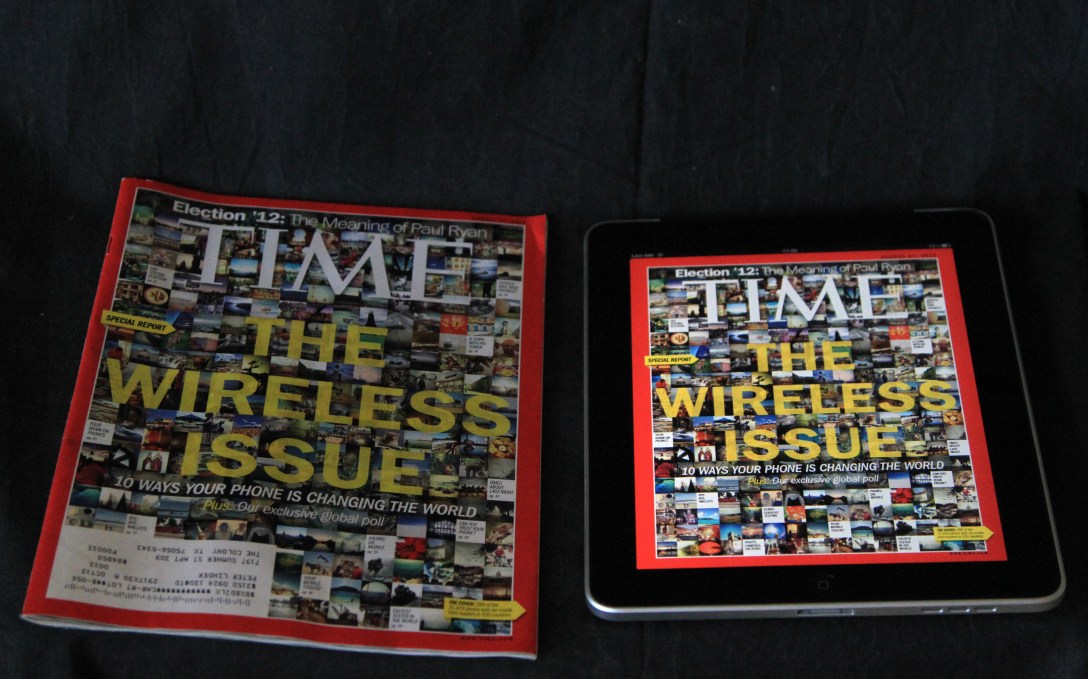
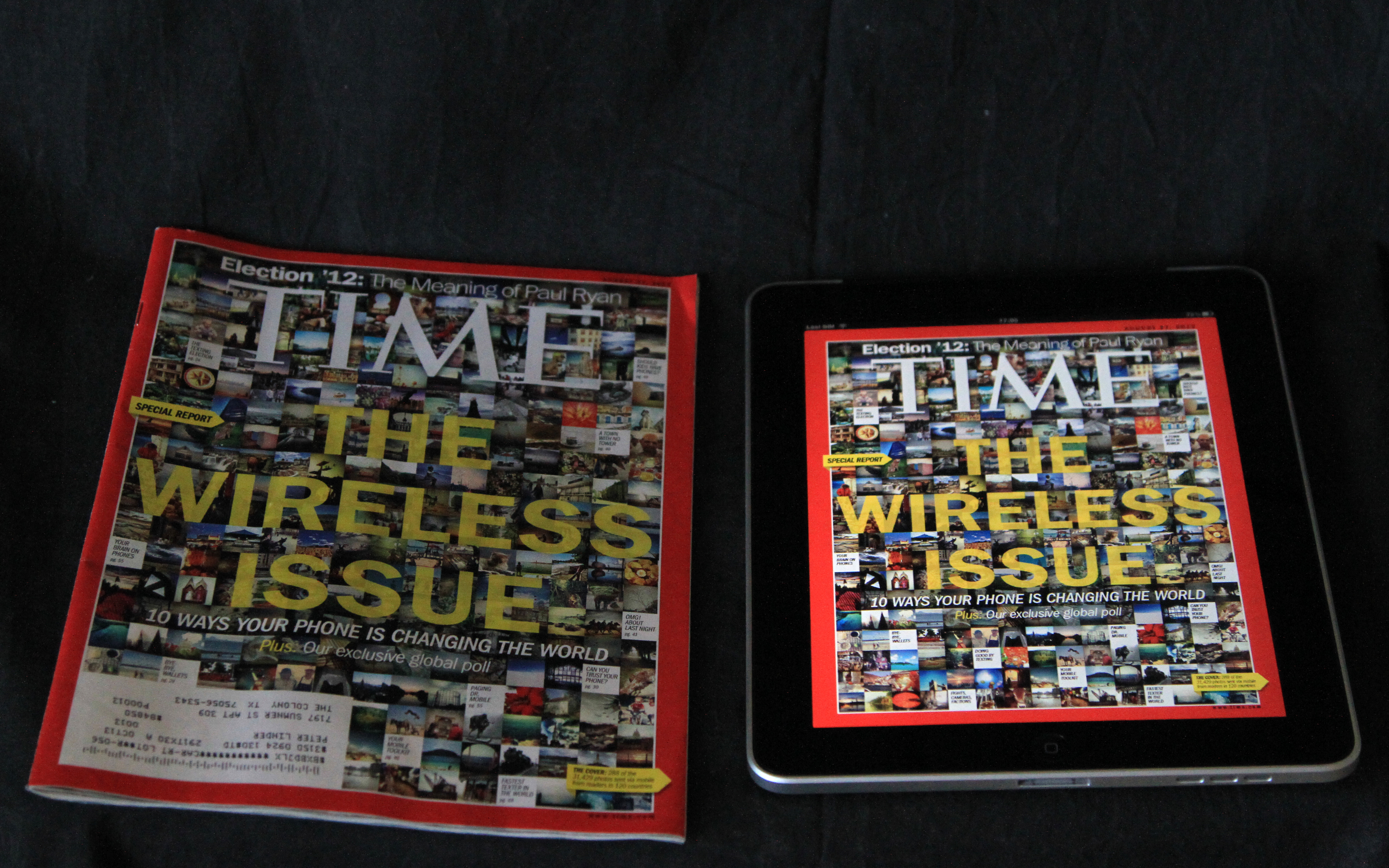
Over the next five years, many print magazines will be transformed into digital publications. Digital magazines will come in two forms: a downloaded version that is available offline, and a networked cloud version that readers can access in real time.

As I flipped through a pile of magazines during my summer vacation, I realized the paper experience might be over sooner than we think. But it’s not all bad news, is it?

E-books and tablets are rapidly changing the distribution and sales processes for magazines and books, as well as the way we consume content. However, if you’re not yet an avid user of an e-reader and you haven’t even begun to transform your reading habits from paper to portable screen, there’s no cause for alarm – well, not just yet. While many of us are adapting to new technologies to consume our favorite content, more popular magazines will continue to exist in print. It’s all a matter of keeping the magazine’s audience happy by offering alternative formats while these are still required.

As larger chunks of the magazine audience move to electronic formats, I do expect the paper experience to become less common. Printing and distribution expenses make up a significant share of the production costs for paper magazines. As much as readers may love the printed versions of their favorite magazines, the overhead costs could force publishers to move to networked magazines only. Already, most magazines come with a subscription, or single-issue purchase, which includes access to an electronic version as an incentive to encourage readers to try the on-screen version.

The primary challenge for magazine publishers is to figure out how to maintain their readership so that advertisers stay on board during the transformation process. How do publishers ensure that their magazines can continue to attract readers after the transition? And how do they reassure advertisers that they can continue to reach their target audience even if the format changes? US subscribers can now subscribe to most magazines at only USD 1 per issue. It will be interesting to follow the business-model innovation for networked magazines in the future; we may see paper/electronic hybrids as well as pure networked-only versions.

I see a bright future ahead. Digital publications will make it possible to open up new advertising models with greater accuracy in terms of measuring the actual viewing of ads and the impact of each ad. The audience will be given access to video capabilities, adding a whole new dynamic to the magazine experience, and the marketing department will have the ability to share the magazine with a wider audience through effective social-media channels.

Cradle citizenship creates changed community


All kids born in 2012 will have dual citizenship; one, or several will be connected to their parents and where they were born, and one will be in the Networked Society.

Kids today are growing up in a digital world with access to devices 24/7. They are using many of these devices, such as tablet computers, three to four years before they even know how to read or write. Responsible use of devices and applications is not intuitive, and an early challenge for parents is to educate kids on what is good and what is bad device usage. This is sometimes tough because as a parent, you are likely to be behind in understanding your kids’ devices and their applications.

In a world where anyone can publish anything, being able to judge information critically is a vital skill needed from an early age. Kids need to know what editing tools can do to pictures and videos, and how easy it is to tweak reality. In addition, texts become more and more subjective the larger the base of writers and the closer the topic is to someone’s heart. Perhaps it was simpler in a world where the bulk of text and pictures in books had to go through some kind of editorial and approval process before they were deemed true.

However, one of the positive things about the emergence of the Networked Society is the opening up of cultural borders. As kids develop worldwide relationships earlier in life, they discover a deeper understanding of different cultures. What baby boomers learned through many years of international travel can now be quickly learned by our children just by living in the Networked Society. One thing that needs to be ensured is people’s manners; politeness is the ingredient to all successful digital communication in the Networked Society.

In my generation, professional skill sets were developed around key knowledge areas and hard work. The skill sets of our kids will be very different, and to a larger extent will be based on their ability to create, contribute and collaborate with others. The rules and guidelines for such work are more complex and less intuitive.

I predict that some of the demands on the children born with a Networked Society citizenship will be that:

* Their global Networked Society citizenship will expose them to a broader range of cultures very early in life.

* Their ability to critically judge information, and to do so quickly, will be vital to thrive in an information-centric society.

* They could be dependent on 50-100 devices in a household and that “device illiteracy” could put them at a significant disadvantage in the Networked Society.

* The analog world still has a lot to offer, and Networked Society citizenship should come on top of the analog world and cultures.

Stadiums See Spectators Spontaneously Sharing Special Seconds

Our kids don’t understand why we brought lighters to concerts or how we shared the experiences from live events with our friends. What they do know is that the smartphone is an enabler for sharing all of their experiences, and events, whether they’re local or global.  This year, the Olympics will be a true networked experience, and to demonstrate today’s connectedness, more than 1,000 Wi-Fi access points have been deployed in London’s Olympic Park alone.

The spontaneous sharing of our lives has become the new norm. We record all our favorite moments whether we attend top-notch events like the Olympics or share our experiences when we watch our favorite national sports. We share our favorite songs when we’re at concerts, and pictures of our friends all dressed up in full fan costumes.

Sharing today is about distributing our favorite moments via video and multi-picture avenues, creating new traffic patterns, where uploading from the stadium dominates. We used to share our experiences with SMS, tweets or short status texts when the only coverage available was GPRS or EDGE. As 3G-, 4G- and Wi-Fi-enabled smartphones enter the stadiums in volumes, so does the demand for networks to support them.

Sharing the local experience while you are abroad is as important as the one you share at home. This is not restricted to sports and concerts, but also includes our desire to share our greatest travel experiences. I wonder when we will be able to go abroad, take pictures and post them in real-time without having to worry about the bill. I think it will be sooner than you think.

My predictions for the future of spectator sharing are that:

* Video and multi-picture posts will be our primary sharing media. Images speak louder than words.

* Major sports stadiums will have advanced networks for boosting data coverage and capacity within three years, and the upstream data-traffic needs will be a key network design criterion.

* New business model innovations will surface to allow us to cross country borders with the stadium-sharing behaviors we have adopted at home.

Mchn-Maaaaaaschiiiiiine-Mchn – Middle Man Matters

© Peter Linder – All Rights Reserved

Why most people miss the role of the world’s largest machine when predicting the future.


When Ericsson sold its 50 percent stake in Sony Ericsson to Sony, a common question to Ericsson employees was: “What do you do now that Sony has bought your company?”


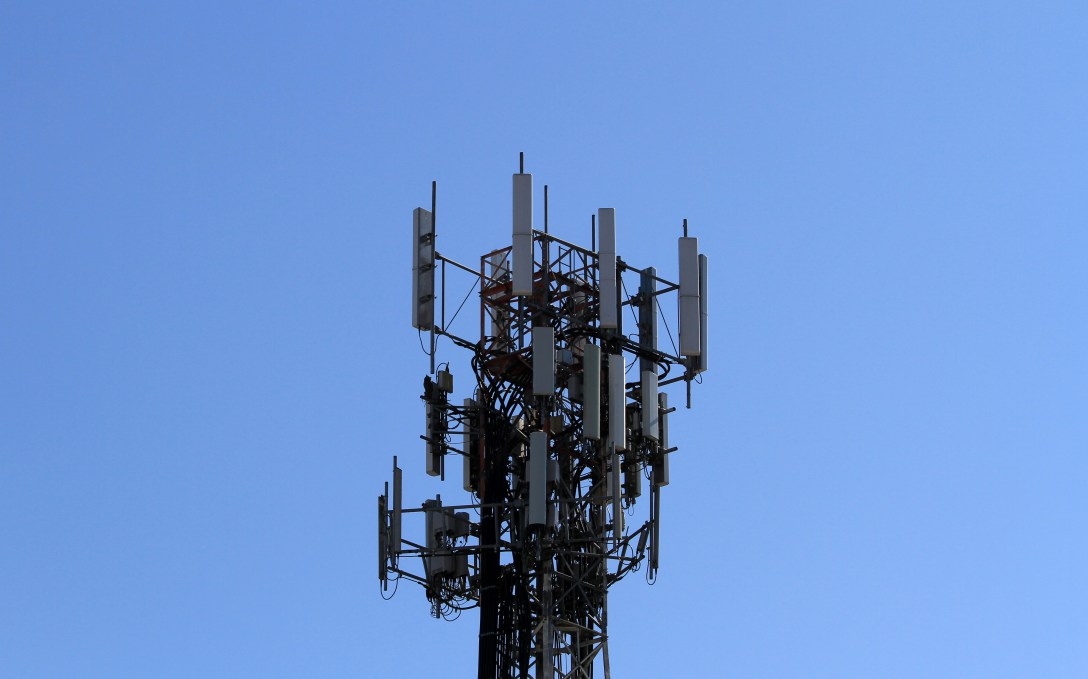
Not all people I meet understand my explanation about what a mobile network is and does. I believe the term “network” is too abstract a concept for most people, even if we keep it simple and say it’s the internet’s backbone and mobile-access network.


In addition, the communications industry sometimes talks about the future in terms of machine-to-machine (M2M) communication and industry verticals. The seven letters that make up machine are used to outline the future of servers and applications at one end, and the future of devices at the other. The magic “2″ refers to the largest machine of them all – the network.

Most people get the idea that there is a machine somewhere working away so that 5 billion people can talk, SMS/TXT and send data to one another. They do not reflect on how this machine is changing so it can transform all the industries around us into smart industries. So how do we get traction with such ideas if the majority of society believes mobile phones communicate with each other like walkie-talkies; in other words with just air between them and no network?


The following examples highlight the role of the network in all society stakeholder groups:


* When breaking mobile-broadband networks into two main parts – the internet backbone and the mobile-access network – most people follow the discussion on what a network is all about a lot better.


* Machine-MACHINE-Machine is a better expression regarding the evolution of the communications industry. This makes it clear to all society stakeholders that there are three fundamental machine developments in play.


* The network plays a vital part in making vertical industries “smart”, and smart industries require smart networks.


* Significant network investments are required to support 50 billion devices across new industries, way beyond the requirements that brought voice and data services to 6 billion mobile phones.


I think the following vital questions need to be asked when discussing the networks in the Networked Society:


* How do we secure the investments in network capacity and coverage to keep up with the demand from the Networked Society?


* How do we create new business model innovations across industry borders so all key stakeholder groups benefit?


* How do we secure regulatory frameworks that promote rather than prevent network innovations?


All of the above are complex issues. The resolution requires a broader understanding in all society groups about what the role of the network is, as it will remain THE enabler for the Networked Society.